

Luxury Brands still underestimate WeChat
What is our vision of WeChat?
In the West, what is retained about this social network: WeChat is the social mobile platform most dynamic in China. WeChat has many features of an instant messaging application to an e-commerce platform. WeChat also has the ability to customize your account to your taste. WeChat offers many opportunities and there is great potential to develop around customer relationships with loyalty programs for example. However, it is observed that most brands use WeChat like other digital channels such as Facebook, Twitter, Instagram only to create their fame while WeChat has so much more to offer to brands.
only 17% of Fashion brands have a loyalty program on WeChat
If we look at the index of L2 Digital IQ Index: Luxury in China, only 17% of Fashion brands and 16% of jewelry and watch brands have a loyalty program on WeChat and 10% of the two categories of brands benefit from coupons and means of payment WeChat. According to WeChat, brands miss almost 300 million users.
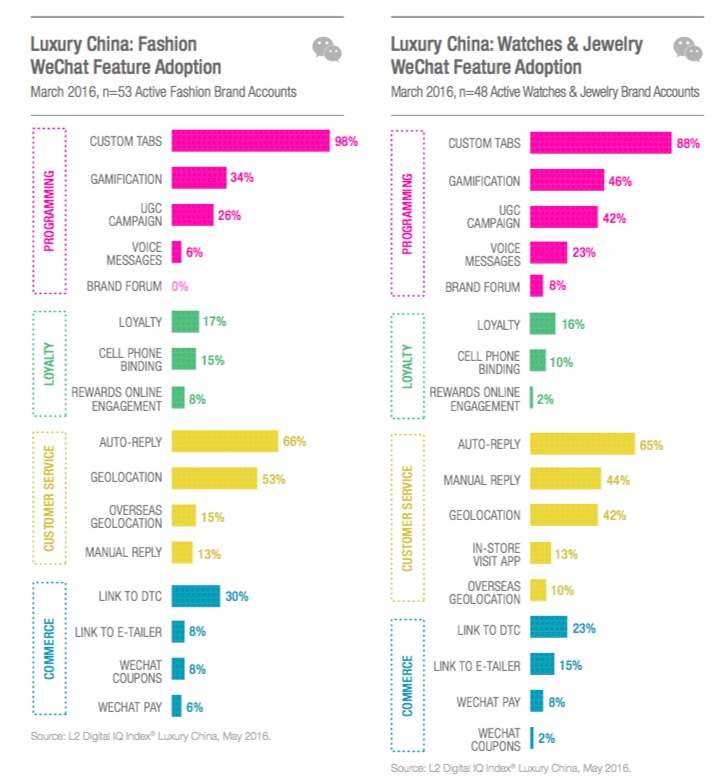
source Digital IQ index
Furthermore, brands are not involved enough in the functionality of customer service. Also according to the Index, only 13% manually answer customer questions; 66% use automated responses. Joailleries and brands of watches have been the most receptive to manual responses, 44% adopt this method.
Read as well: The Ultimate Guide to Wechat Marketing
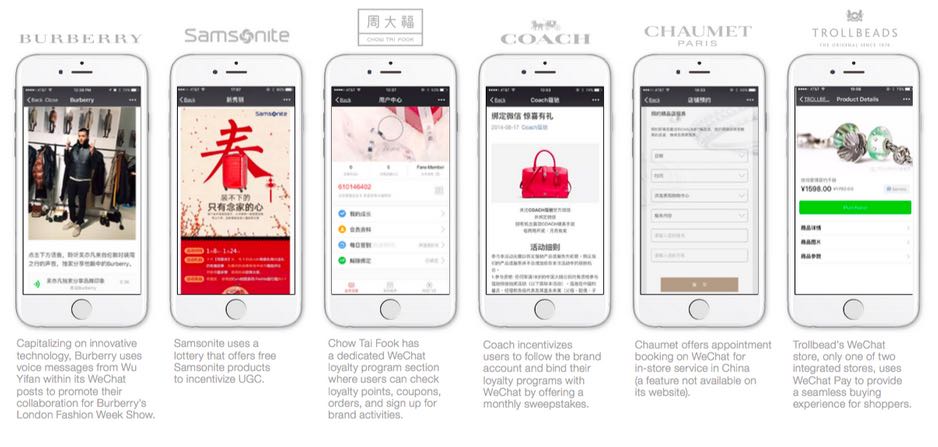
Although according to this study we have seen a lack of commitment from some brands on WeChat, you can see Some brands have managed to optimize their use of WeChat for their marketing campaigns. Burberry the great British luxury brand is a good example that WeChat may increase future opportunities for a brand. To promote his show of London Fashion Week, Burberry has used the voice of the famous top model Wu Yifan to send voice messages on WeChat (voice messages are very popular in China) in order to attract the attention of Chinese customers.
Samsonite has set up a lottery that allows the user to win free products to entice users to share the game with their family or contacts.
Chinese jewelry brand Chow Tai Fook has dedicated a special section for customer loyalty where customers can check their loyalty points, coupons, orders or register for upcoming events of the brand.
Chaumet offers to make an appointment directly from a WeChat account, this service is not available on the online site.
Finally, Trollbeads and IWC are two brands to have their online store on WeChat, allowing customers to view different products and buy them with WeChat of payment.
 For More Information :
- Mini-videos, the new digital weapon in China
- New marketing trends in China !
- Why Fashion Western brands have to use perfectly social Media in Fashion
About our Agency
We can help to boost your Wechat see our case studies here
3 comments
Otto.van.otto
Nowadays in 2020, this article is still up-to-date! Most of the luxury brands now have a WeChat account, either an official or professional, but the possibilities of Wechat are still underestimated by brands. Mini-programs, H5 brochures, games… Wechat is definitely a weapon for luxury brands in China.
Dolores Admin
Private events, live streaming, group marketing, vip offers etc
Yeah, so many things can be done!
Maybe we should give this article a 2020 update