
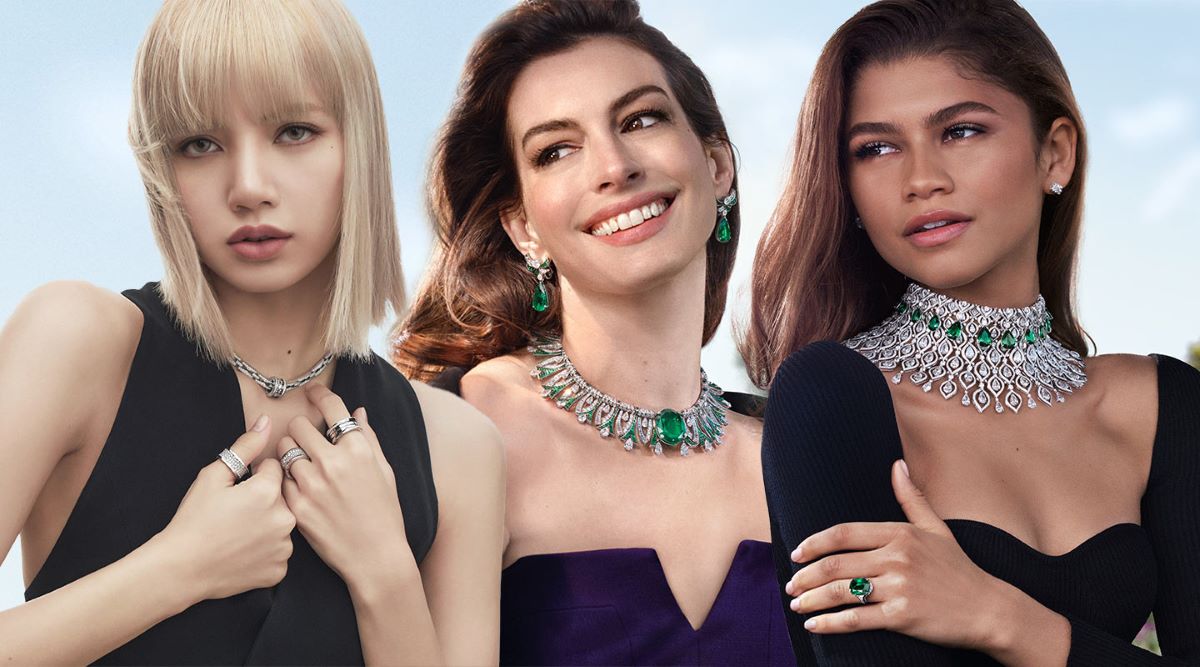
Guest expert: Philip Chen, co-founder of GMA, a separate Shanghai agency — Bvlgari’s branded film strategy in China is a case study in how luxury jewelry brands can use cinematic content to build emotional brand depth that product photography alone cannot achieve. The “Unexpected Wonders” campaign showed what happens when a luxury house invests in genuine artistic collaboration rather than polished advertising — and the Chinese market response was instructive for any brand thinking about long-form content investment.
In Bvlgari’s branded film “Unexpected Wonders,” a journey in search of beauty begins in eternal Rome. Bvlgari collaborated with Paolo Sorrentino — Oscar-winning Italian director, known for “The Great Beauty” and “Il Divo” — to create dreamlike, surreal imagery that explores the power and diversity of women while showcasing the Bvlgari High Jewel collection. The film features Anne Hathaway as global brand ambassador and Zendaya as the face of the High Jewel pieces. What made this campaign succeed in China, and what can other luxury brands learn from it?
Why Cinematic Brand Films Work in China
Chinese luxury consumers in 2024-2025 have become extraordinarily sophisticated content consumers. Years of exposure to high-production brand campaigns from every major luxury house have raised the bar for what passes as compelling brand content. A standard product photography campaign, however beautiful, no longer generates the kind of Xiaohongshu discussion and Weibo sharing that luxury brands need to justify their marketing investment.
Cinematic brand films — produced to genuine film quality with recognized creative talent, compelling narrative, and emotional resonance — break through this saturation by offering something Chinese luxury consumers genuinely want to watch and share. The “Unexpected Wonders” film works because:
- Paolo Sorrentino’s creative authority: Chinese cinephiles know Sorrentino’s work — “La Grande Bellezza” (The Great Beauty) won the Academy Award for Best Foreign Language Film in 2014 and has a dedicated Chinese art-house audience. Bvlgari using Sorrentino signals that this is a genuinely artistic project, not simply branded content dressed up as art
- Anne Hathaway and Zendaya’s China reach: Both ambassadors have significant Chinese social media followings. Zendaya specifically has achieved enormous cultural presence in China through her role in “Dune” and her position as one of the most-followed international celebrities on Chinese social platforms
- Rome as aspirational travel destination: Chinese consumers aspire strongly to Italian and European luxury cultural experiences. Rome as the film’s setting positions Bvlgari’s jewelry within a cultural geography that Chinese luxury consumers find deeply aspirational
- The surreal visual language: Sorrentino’s signature surrealism — unexpected imagery, dreamlike sequence, visual surprise — provides the social media “moment” that drives sharing and discussion. A film with no surprising images generates no conversation; “Unexpected Wonders” delivers shareable visual moments throughout
Bvlgari’s China Strategy in Context
Bvlgari has built one of the stronger Italian luxury jewelry presences in China over the past decade. Key elements of the brand’s China positioning:
Roman heritage as differentiation: While French luxury houses (Cartier, Van Cleef, Chaumet) compete on Parisian elegance, and British brands on royal heritage, Bvlgari owns the Roman imperial aesthetic — bold, colorful, architecturally inspired, unapologetically maximalist. This differentiation positions Bvlgari distinctly in Chinese consumers’ mental map of luxury jewelry heritage.
B.zero1 as the China hero product: The B.zero1 ring — Bvlgari’s tubular gold ring with B.zero1 logo detail — has become one of the brand’s best-performing products in China across age groups. Its sculptural form, unambiguous brand signaling (Bulgari letters are visible), and variety of metal and stone combinations make it versatile across Chinese consumer occasions. The ring appears consistently in Xiaohongshu “ring stack” content from Chinese fashion influencers.
Serpenti collection’s China cultural resonance: The snake (serpent) motif in Bvlgari’s iconic Serpenti collection has specific Chinese cultural resonance — the snake is one of the 12 Chinese zodiac animals, associated with wisdom, elegance, and transformation. This cultural overlap between Bvlgari’s Roman snake heritage and Chinese zodiac associations gives the Serpenti collection a natural Chinese narrative that the brand has leveraged effectively in Year of the Snake CNY campaigns.
What Other Luxury Brands Can Learn From Bvlgari’s Film Strategy
Creative talent signals intent: The creative director or director you choose for a brand film communicates your brand’s ambition to Chinese cultural consumers who follow film, fashion, and art simultaneously. A recognized creative name is not a marketing expense — it is a brand signal. Choosing an undistinguished director for a “brand film” produces undistinguished content that Chinese consumers correctly identify as advertising disguised as art.
Ambassador selection is geopolitical: For luxury brands choosing global ambassadors who will represent them in China, the ambassador’s Chinese cultural standing matters as much as their Western celebrity status. Zendaya’s “Dune” success and fashion icon status in China gave Bvlgari a culturally relevant Chinese-audience hook that less China-prominent celebrities could not provide.
Narrative over product feature: The “Unexpected Wonders” film does not spend significant time explaining Bvlgari’s gemstone cutting techniques or metal alloy quality — it builds desire through emotional narrative and beauty. Chinese luxury consumers are not buying a product’s technical specifications; they are buying the feeling the brand makes them associate with the product. Films that lead with emotion build stronger purchase motivation than films that lead with features.
Long-form on Youku, short-form cuts on Douyin: Bvlgari’s film strategy pairs long-form film release (on Youku and brand WeChat channels) with short-form extract clips adapted for Douyin. The Douyin clips drive awareness and curiosity; the full film delivers depth for interested viewers who seek it. This dual-format approach maximizes both reach and engagement depth.
FAQ — Luxury Brand Films in China
Do brand films generate commercial return in China’s luxury market?
Brand films generate commercial return in China through mechanisms that are less direct but more durable than performance advertising. The primary commercial returns: earned media coverage — significant brand films receive editorial coverage in Vogue China, Harper’s Bazaar China, GQ China, and art media that carry press value equivalent to multiple times the production budget; Xiaohongshu organic sharing — Chinese cultural consumers who appreciate the artistic quality of a brand film share it on Xiaohongshu with personal commentary, reaching audiences with genuine cultural interest in luxury; brand equity deepening — luxury consumers who experience a brand through a memorable cinematic moment associate the brand with aesthetic sophistication that persists through subsequent product consideration decisions; and search behavior — brand film launches generate search spikes for the brand on Baidu, Tmall, and Xiaohongshu as viewers seek product information following film exposure. The challenge: brand film ROI is difficult to attribute directly in Chinese marketing measurement systems that track click-through and conversion. Brands that evaluate all marketing spend through direct-response metrics will systematically undervalue brand film investment. The appropriate measurement framework for luxury brand films is brand health tracking (awareness, consideration, preference changes among target consumers) measured quarterly, rather than campaign-period conversion rates.
How should luxury brands distribute branded films in China?
Luxury brand film distribution in China requires a multi-platform approach tailored to each platform’s format requirements and audience expectations. WeChat Official Account: the primary owned distribution channel — publish the full film and a brand editorial accompanying it to Official Account followers on launch day. This reaches the brand’s most engaged existing Chinese audience first. Youku: host the full film on a brand-managed Youku channel for long-term discoverability and integration with Alibaba’s search ecosystem. Youku brand channels can be customized with brand visual identity and organized by content series. Weibo: publish a teaser clip (90-120 seconds) with full film link — Weibo’s sharing mechanics allow rapid spread among fashion and culture-interested Chinese consumers. Douyin: create 3-5 adapted short-form clips (15-60 seconds) that extract the film’s most visually striking or emotionally resonant moments. Each Douyin clip should work standalone without requiring knowledge of the full film. Xiaohongshu: the brand account publishes a selection of film stills with editorial notes that contextualize the creative collaboration — Xiaohongshu’s image-text format is ideal for presenting the creative story behind the film. iQIYI and Tencent Video: for films with significant creative credentials (directed by known filmmaker, featuring major international talent), pitch editorial placement on iQIYI’s or Tencent Video’s brand content sections, which provide additional reach beyond the brand’s owned distribution.
Which luxury jewelry brands produce the best content for China in 2024-2025?
The luxury jewelry brands producing the most effective China-market content in 2024-2025, based on Xiaohongshu engagement, Weibo discussion, and brand health metrics. Cartier: consistently produces the most culturally nuanced China content — CNY campaigns that feature Chinese families across generations, “Trinity” collection content that tells genuine love and friendship stories relevant to Chinese relationship culture, and Cartier Mansion experiential events in Shanghai that generate significant organic Xiaohongshu content. Van Cleef & Arpels: the Poetic Complications collection and Alhambra heritage storytelling are deeply aligned with Chinese consumers’ appreciation for craft heritage and lucky symbolism (the four-leaf clover has direct resonance with Chinese luck culture). Van Cleef’s China content consistently emphasizes fairy tale and poetry aesthetics that resonate with Chinese women’s romantic imagination. Bvlgari: strong cinematic content (Unexpected Wonders being the best example) combined with Serpenti collection CNY activations that leverage Chinese zodiac cultural alignment. Tiffany & Co. (now LVMH): significant investment in Chinese Gen Z content strategy since the LVMH acquisition, with Tiffany T collection and HardWear line positioned through young Chinese cultural content — music artists, young actress ambassadors, and Xiaohongshu styling content targeting the 22-35 demographic. Chinese domestic: Laobao Jewelry (老铺黄金) and Chow Tai Fook’s craft lines have invested in heritage craft storytelling content that Chinese cultural media covers editorially, building brand depth beyond pure commercial promotion.
About Fashion China Agency
Fashion China Agency is an independent Shanghai-based agency specialising in fashion, luxury, and lifestyle brand entry into the Chinese market. We help international brands build awareness, drive e-commerce revenue, and build communities on Xiaohongshu, Douyin, WeChat, and Tmall.
External expert: Philip Chen is co-founder of GMA (Gentlemen Marketing Agency), a separate digital agency in Shanghai. He is not part of the Fashion China Agency team: we quote him as an independent expert on this topic. Chinese-born, Shanghai-based, 12 years working with European and American fashion and luxury brands on China market entry. Read GMA’s view on branding in China or follow Philip Chen on LinkedIn.
External expert: Marcus Zhan is associate director at GMA (Gentlemen Marketing Agency), a separate digital agency in Shanghai. He is not part of the Fashion China Agency team: we publish his analysis as an independent expert on this topic. Read GMA’s view on branding in China or follow Marcus Zhan on LinkedIn.
Fashion China Agency is an independent agency based in Shanghai, specialised in luxury, fashion and beauty brands in China. Experts from other agencies quoted in our articles speak in their own name.
1 comment
Harold
A nice concept. I love it .
No wonder Chinese love it too.