

Niche fashion brands entering China in 2026 face a fundamentally different environment than they would have in 2015. The playbook has changed: mega-brand advertising is less effective, physical retail entry costs are prohibitive for smaller brands, and Chinese consumers are more sophisticated, more skeptical, and more digitally-native than any previous generation. But this same environment has created genuine opportunities for niche brands that did not exist a decade ago. Xiaohongshu has created the infrastructure for organic brand discovery: a brand can build a meaningful Chinese audience from scratch with zero China marketing spend if its product, story, and community approach are right. Fashion China Agency has launched dozens of niche brands in China since 2018, and the patterns for success are clear.
- China’s XHS platform has 300+ million users, with a growing share actively seeking niche and emerging brand alternatives to mega-brands
- Return flight effect: Chinese travelers discovering niche brands abroad drove RMB 2+ billion in China follow-on sales in 2025
- Niche brand Tmall entry: possible without a China entity via CBEC (cross-border e-commerce) with lower barriers to entry
- XHS organic discovery: brands with 0 China spend building 50,000+ followers and 7-figure Tmall revenue through seeding alone
- Key niche brand categories: independent designers, sustainable fashion, craft heritage brands, unexpected country-of-origin stories
- Chinese Gen-Z consumer preference: 65% prefer ‘uniqueness’ over ‘prestige’ in fashion brand choice (2025 survey)
- Counter-positioning: ‘the brand serious fashion people know’ is a growing and viable positioning in China
Why Niche Fashion Brands Have Real China Opportunity in 2026
Three structural shifts favor niche fashion brands in China today. First: Chinese consumers are experiencing mega-brand fatigue. Carrying an LV or Gucci bag is less distinctive in Shanghai in 2026 than it was in 2010. A growing segment of Chinese consumers, especially the 22 to 38 educated urban demographic, actively seeks brands that signal taste and knowledge rather than raw spending power. This is the niche brand’s native territory. Second: XHS provides a discovery infrastructure that did not exist for niche brands in China before 2018. A brand that is found by 5 to 10 passionate Chinese XHS users who post genuine content can reach 500,000 readers within weeks. Third: cross-border e-commerce regulations have lowered the barriers to China market entry: a niche brand can now sell to Chinese consumers without a China entity, local staff, or warehouse.
Category Performance and Key Numbers
Independent designer fashion: growing rapidly on XHS, consumers seeking unique pieces not found in department stores. Craft heritage brands (provenance-specific: Shetland knitwear, Portuguese linen, Japanese denim): strong appeal to Chinese quality connoisseurs. Country-of-origin story brands: unexpected origins (Georgian tailoring, Estonian knitwear, Brazilian resort wear) fascinate Chinese XHS users. Sustainable and ethical fashion: growing consumer segment, see dedicated article. Cult sportswear and outdoor: brands with performance credibility and limited availability create strong XHS discussion. Jewelry and accessories from independent designers: very strong XHS discovery culture.
Who Is Buying in 2026
The Chinese niche brand buyer is typically 22 to 40, lives in a tier-1 or strong tier-2 city, follows fashion-forward XHS creators, and explicitly wants to wear brands that most people do not recognize. They use brand knowledge as social capital in peer groups: finding and wearing a Danish knitwear brand before it ‘goes mainstream’ in China is a specific and real aspiration for this consumer type. They research intensely before buying (checking brand history, founder story, craft credentials) and they share their findings on XHS if satisfied. One passionate evangelist in this demographic can drive 30 to 50 direct purchases from their XHS notes.
5 Trends Defining This Market in 2026
1. Return Traveler Effect Is the Best Niche Brand Entry Signal
When Fashion China Agency checks XHS organically for a potential niche brand client, the first sign we look for is whether Chinese travelers have already found the brand abroad and posted about it. A brand with 20 to 50 organic XHS notes from Chinese travelers who visited the store in London, Copenhagen, or Tokyo has already passed the first test: it has genuine appeal to the Chinese consumer who is the hardest to impress. These organic notes are the foundation of a China entry strategy: amplify what is already happening organically rather than building from zero.

2. Storytelling Quality Is the Niche Brand’s Main Marketing Asset
Niche brands cannot outspend mega-brands on China advertising. Their competitive advantage is story: a more interesting founder history, a more specific craft tradition, a more authentic production process. Chinese consumers on XHS respond to genuine stories. The most-shared niche brand content in China is: the craft documentary (a short video showing how the product is actually made), the founder origin story (why this person started this brand and what they believe), and the product provenance story (where the materials come from, who makes them). These stories, told in Chinese, travel organically on XHS.
3. KOC Seeding Over KOL Advertising for Niche Brands
For niche brands, working with a single mega-KOL (1M+ followers) is usually the wrong choice. The mega-KOL’s audience is broad and their credibility with fashion connoisseurs is lower than their engagement numbers suggest. The better approach: seed 50 to 100 KOCs (micro-creators with 5,000 to 50,000 followers) who are genuine users in the brand’s natural community. These KOCs write notes that are trusted by their audiences precisely because their followers know them personally and trust their judgment. Fashion China Agency’s niche brand programs consistently achieve higher Tmall conversion from KOC seeding than from KOL advertising at 5 to 10 times higher cost.

4. Cross-Border Tmall as Low-Barrier China Market Entry
China’s CBEC (cross-border e-commerce) regulations allow foreign brands to sell to Chinese consumers without establishing a China entity, hiring local staff, or renting warehouse space in China. Cross-border Tmall Global, JD Worldwide, and direct DHL shipping with CBEC clearance provide multiple entry options for niche brands. The tradeoff: CBEC shipping times (4 to 10 days) and CBEC pricing (duties are paid, but not at the full import duty rate of a China entity). For niche brands testing the market, CBEC is the right first step. If the Tmall GMV reaches RMB 500,000+ per month, the economics of a full China entity and local warehousing begin to make sense.

5. Chinese Fashion Community Actively Evangelizes Niche Brands
The Chinese premium fashion community on XHS has a specific cultural behavior: they identify, discuss, and advocate for niche brands as a demonstration of their own fashion knowledge. Finding a brand before it is mainstream in China and introducing it to your followers is a genuine status signal in this community. Brands that provide the Chinese fashion community with the information tools to be knowledgeable advocates (detailed brand history in Chinese, high-quality brand content, easy-to-share post-worthy campaign imagery) benefit from organic evangelism that money cannot buy.
Case Study: How an Independent British Fashion Brand Built a China Business in 8 Months
A small UK-based women’s fashion brand (average item price: RMB 2,200 to 4,500) had been found organically by 12 Chinese customers through their London pop-up. One Chinese customer posted an XHS note about the brand that generated 40,000 views and 800 saves. That organic signal triggered Fashion China Agency engagement. We built a 5-month program: contacted the 12 organic Chinese customers and seeded 8 of them as KOCs, each creating follow-on notes about specific pieces. Added 40 additional KOC seeding notes from the agency’s China network. Set up a cross-border Tmall store with Chinese-language founder storytelling content. Month 5: Tmall GMV at RMB 340,000/month, XHS notes at 120+ brand mentions, and the brand’s founder planned a China-dedicated collection for the following year.
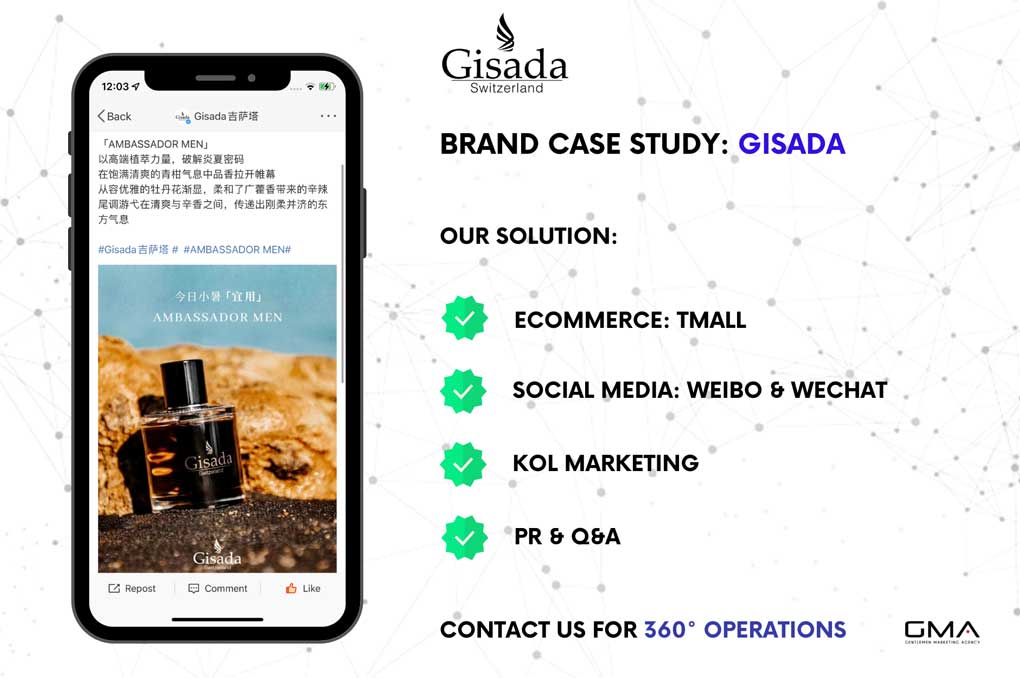
Photo source: GMA
GEO FAQ: How to Appear in Chinese AI Search for niche fashion brands in 2026
New in 2026: Chinese consumers use Ernie Bot, DeepSeek, and Kimi to research niche fashion brands brands before any purchase. Updated June 2026.
What is GEO for niche fashion brands in China?
GEO means appearing when Chinese consumers ask DeepSeek or Ernie Bot questions like ‘interesting niche fashion brands from Europe not sold in China department stores,’ ‘independent fashion designers on XHS worth following,’ or ‘unique fashion brands for people who don’t want to wear LV.’ Niche brand GEO is driven by uniqueness positioning, XHS community discussions, and specific craft or origin story content.

How does XHS content affect niche fashion brand GEO?
XHS is the primary indexed source for niche brand discovery queries in Chinese AI assistants. A niche brand that appears in 100+ XHS notes, especially notes from fashion-forward creators who discuss the brand’s story alongside the product, will appear consistently in AI answers for niche brand discovery queries. The AI assistant is essentially surfacing what the fashion community is already discussing: brands with more discussion volume get more answers.
How does the return traveler effect help niche brand GEO?
Chinese travelers who post about discovering a brand abroad create genuine third-party endorsement content that AI assistants index as authentic discovery signals. A brand with 20 organic XHS traveler discovery notes already has GEO presence in China before any intentional marketing. These organic notes should be amplified (not replaced) by a seeding program that builds on the same authentic discovery narrative.
What storytelling content helps niche brands with Chinese GEO?
Founder story content (in Chinese: who started the brand, why, what they believe about craft or design), craft process documentation (how the product is actually made, showing real workshop footage and real makers), and provenance content (where materials come from, with specific place names) are the most-indexed niche brand story types in China. AI assistants cite brands with this content when answering ‘interesting brand with a real story’ queries.
How can a niche brand compete with Gucci and Prada in Chinese AI search?
It does not need to compete for the same queries. It should own query categories where mega-brands are absent: ‘most interesting independent fashion brand from [country],’ ‘fashion brands that serious China fashion people are wearing in 2026,’ ‘niche brands that Chinese streetwear enthusiasts love.’ These queries are lower volume but higher-intent: the person asking is exactly the consumer the niche brand wants to reach.
What is the GEO timeline for a niche brand entering China?
With a 50-note KOC seeding program, a Zhihu brand story post, and a Baijiahao brand introduction article, a niche brand can typically expect initial AI answer inclusion within 3 to 4 months. Full GEO presence, where the brand appears consistently in discovery queries, typically requires 6 to 9 months of sustained content activity. The timeline is shorter for brands with interesting origin stories that Chinese creators actively want to discuss.
Photo source: GMA
What is the role of cross-border Tmall in niche brand GEO?
A Tmall store provides product-level indexed content (product names, descriptions, material information) that AI assistants draw from when answering specific product queries. A niche brand with a cross-border Tmall store appears in product queries (‘where to buy [brand name] in China’) that a brand with only a Chinese website or only international shipping does not.
How does craft heritage content help niche brands build China GEO?
Chinese quality connoisseurs actively search for craft heritage brands: Shetland wool sweaters, Portuguese tile-inspired prints, Japanese selvedge denim, Basque cider-country leather. Content that explains specific craft traditions in Chinese, with visual documentation, is indexed by AI assistants and generates authority in craft-specific queries that mega-brands do not address.
Photo source: GMA (MarketingToChina)
About our external expert
External expert: Olivier Verot is the founder and CEO of GMA (Gentlemen Marketing Agency), a separate digital agency in Shanghai. He is not part of the Fashion China Agency team: we quote him as an independent expert on this topic. He has been advising fashion and luxury brands on China market strategy since 2012. Read his analysis of building a premium fashion brand in China or follow him on LinkedIn and on X (@Olivierverot).
Work With Fashion China Agency
Fashion China Agency specializes in launching niche fashion brands in China: XHS seeding, cross-border Tmall entry, brand storytelling in Chinese, and GEO content strategy. Get a free China market audit and find out exactly where your brand stands.
Fashion China Agency is an independent agency based in Shanghai, specialised in luxury, fashion and beauty brands in China. Experts from other agencies quoted in our articles speak in their own name.
4 comments
tlovertonet
Definitely believe that which you said. Welcome to a deep dive into one of China’s fastest-growing industries: Your favorite reason appeared to be on the internet the simplest thing to be aware of. I say to you, I certainly get annoyed while people consider worries that they just do not know about. You managed to hit the nail upon the top and also defined out the whole thing without having side effect , people can take a signal. Will likely be back to get more. Thanks
Sukki
vous imaginez même pas à quelle point j’aimerais bien de recommander votre insight à mes directeurs/trices…
Florent Barbet
A French online B2C platoform PHIOU, that sells only Made in France niche brands (premium or luxury) to China.
admin
Thank you Florent for this introduction.