
Three campaigns. Three apologies. One pattern nobody in Paris or Milan seems to study before launch. I spent nine years at Vogue China checking facts before they went to print. Now I run a Shanghai agency for luxury brands. Both jobs taught me the same lesson: in China, a design detail is never just a detail. It has a name, a province, sometimes a dynasty. Skip that homework and the internet will do it for you, in public, within hours.
The pattern repeats because nobody reads the room first
Three cases in the past two years follow the same shape. A brand pulls a visual or a performance from Chinese culture, skips the research or hides it, and Chinese audiences recognize the source instantly. The brand apologizes, deletes the post, and pulls the campaign, usually within a week.
None of these brands set out to offend anyone. That is the problem. Whoever approved the campaign never asked the one question that would have stopped it at the concept stage: where does this actually come from, and does the campaign say so?
lululemon’s drums at the Great Wall
In May 2026, lululemon staged an event at the Huanghuacheng section of the Great Wall. Brand ambassador Zhu Yilong performed alongside a drum troupe. The marketing promoted it as “Chinese great drums.” Within days, percussion professionals pointed out that the drumming style, the drum shapes, and the playing technique looked much closer to Japanese taiko than to any Chinese drumming tradition. Wrong instrument, wrong lineage, dressed up as heritage.
The backlash moved fast. By June 16, 2026, lululemon had apologized and pulled the promotional content. A brand paid a location fee for one of the most recognizable heritage sites on earth, and still got the culture wrong on top of it. Location does not equal research. You can film at the Great Wall and still misname the drums.
Dior’s skirt that was never just a silhouette
Dior gave the market a preview of this exact failure back in 2022. It released a black skirt priced around 29,000 yuan, with the front and back panels and the side pleats built almost identically to the traditional Chinese mamian skirt, a garment with centuries of documented history. Dior’s own marketing called it an “iconic Dior silhouette.” No mention of mamian. No mention of China.
Chinese consumers and students abroad were not confused for long. Photos comparing the two garments side by side moved fast online. The protests were loud enough that Dior pulled the piece from its mainland stores. The design itself was not the offense. The silence about where it came from was.
Fendi’s knot with the wrong country attached
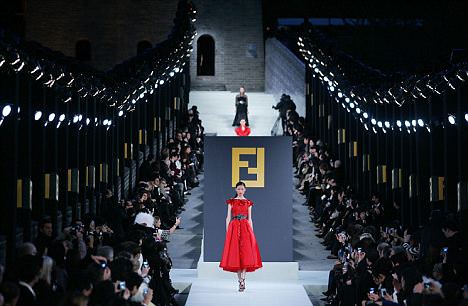
In 2024, Fendi published a bag collaboration built around a knot motif that looked, to any Chinese eye, like a Chinese knot, a craft with its own long tradition and its own name. The campaign copy labeled it a “Korean traditional knot.” Fendi had worked with Korean artisans on the piece, and somewhere in that process the origin of the knotwork got swapped for the country of the collaborators. The backlash was immediate. Fendi deleted the post.
This case is the clearest of the three, because it shows the mistake is not always about hiding a source. Sometimes it is about naming the wrong one. Getting the geography wrong stings as much as saying nothing at all.

What a magazine fact-checking desk would have caught
At Vogue China, every caption and every claim about where a fabric or a pattern came from went through a check before it ran. Not because anyone expected a scandal. Because a wrong attribution in print is embarrassing and hard to walk back, and readers notice. A junior editor learns fast that “traditional Chinese element” is not a caption. You name the region, the dynasty if you can, the craft, the maker if there is one.
None of the three campaigns above would have survived that desk. A fact-checker would have asked one question about the drums at Huanghuacheng: which tradition, exactly, and who confirmed it? A fact-checker would have asked Dior’s team where the skirt panels came from before “iconic silhouette” went to print. A fact-checker would have caught “Korean traditional knot” on sight, because the visual reference was sitting right there in the layout.
This is not a special skill reserved for magazines. It is one phone call, one search, one conversation with someone who knows the craft. Brands skip it because nobody on the approval chain is required to ask.
Borrowing and owning are not the same thing
Cultural borrowing has always driven fashion. Nobody serious argues that brands should stop drawing on traditions outside their home country. The question is what happens between the borrowing and the launch.
Do the research. Find out where the pattern, the knot, the drum, the silhouette actually comes from. Then say so, in the campaign itself, not in a follow-up statement after the complaints start. Adidas got this right with a Tang jacket collection made with a Chinese design team and marketed with the origin front and center. It became one of the more talked-about pieces of the year for the right reasons.
The difference between a campaign that gets celebrated and one that gets cancelled is rarely the design choice. It is whether the brand knew what it was using, and said so out loud.
A pre-launch checklist for any China campaign touching local culture
Before a campaign involving Chinese heritage, craft, or regional culture goes anywhere near a shoot date, run it through these questions:
- Where does this pattern, motif, garment shape, instrument, or technique actually originate? Name the region and, if possible, the era.
- Has a specialist in that specific craft, not a general cultural consultant, reviewed the concept?
- Does the campaign copy name the origin explicitly, rather than using vague phrases like “iconic silhouette” or “inspired by tradition”?
- If the brand collaborated with artisans from a different country, has anyone checked that the design element is actually from that country?
- Would a Chinese audience recognize this element on sight? If yes, has someone from that audience reviewed the campaign before launch?
- Is there a local craftsperson or community that should be credited, consulted, or compensated?
- Who signs off if legal, marketing, and creative disagree about how much detail to disclose?
This list takes one meeting. Compare that to an apology, a pulled campaign, and a week of coverage nobody in Paris wanted.
Why this keeps happening at the top of the market
These three brands have research departments, legal teams, and China offices. The failure is not resources. It is a gap in the process. A cultural detail passes through design, then marketing, then legal, and none of those teams is asked to confirm where it came from.
This is where reputation work needs to sit before launch, not after. A PR team based in China can flag a cultural detail before it becomes a headline, and can manage the response fast if a campaign already went out with a problem attached. The speed and tone of that response matters as much as the apology itself, which is where reputation management earns its place in the plan, not just the cleanup. For premium and luxury brands, a China-based luxury team that knows both the craft heritage and the online audience can catch this before a dollar goes into media spend.
The standard is simple
Check the source. Name the source. None of the three brands above met that standard before launch. It costs one conversation with the right specialist. It saves a public apology and a pulled campaign.
If a China campaign on your calendar touches local culture, heritage, or craft, run it through the checklist above before the shoot date, not after the complaints start. That review is a normal part of what my team does for clients before launch, not an afterthought.
Source: People’s Daily Online

Cindy Zhang is the CEO of Fashion China Agency. Fifteen years inside Chinese fashion and luxury: editorial and PR at Vogue China, brand-side experience with Guerlain, then the luxury segment at Xiaohongshu. She now leads a Shanghai-based team working exclusively with premium and luxury fashion brands in China. Read her full story →