

Marketing Tips.
Nowadays China is the world’s largest market enabling apparel retailers’ opportunities to reach tech-savvy consumers, which are increasingly craving to buy products through cross-border e-commerce.
Furthermore, due to the great population of 1.3 billion people, companies with international aims cannot skip getting engaged with the Chinese market. Bain & Company predicts that the total value of Chinese e-commerce will skyrocket to $1.45 trillion in total value by 2020, due to the fact that 150 000 Chinese shoppers turn to e-commerce for the first time each day.
Remarkably that in 2016 in terms of foreign goods online purchases were estimated up to 15 percent of online purchases, additionally this rate is expected by eMarketer to increase up to 25 percent by 2020.
Potentially there is plenty of companies willing to sell to Chinese consumers, although not all of them know which rules to follow in order to succeed in the Chinese market.
In this sense, in this article, you can find one of the most effective marketing tips on how to get engaged with Chinese consumers successfully.
1. Recognize local differences
It is vital to understand that the Chinese market is very unique and it has its own pattern and different rules of the way how the whole market works. Even though, depending on the location of your targeted Chinese consumers, in this case, a marketing strategy can vary. For instance, in Beijing and Guangzhou marketing strategies can be totally different, due to the different preferences of Chinese consumers, and a massive variety of religious, cultural, and ethnic backgrounds in the different regions. Therefore, it is important to make real research in order to find out all of the specifics of whatever market in China you want to enter.

Therefore, in China, it is vital to build your brand’s reputation, due to the fact that English positive reviews on western media platforms will not be visible on the Chinese net. Notably, Mandarin Chinese Characters are used in the vast majority of internet research (over 97,5%).
In China, you have to start from scratch. The vast majority of internet research (over 97.5%) is conducted in Mandarin Chinese Characters. English content, positive reviews, and most western media platforms will not be visible on the Chinese net.
Picture the Chinese web as a separate region of the net, cut off by the ‘Great Chinese Firewall’, it’s a unique ecosystem that requires a fresh approach for you to build your visibility & reputation on the right Chinese platforms to your target demographic.
All in all, it is important to realize that the Chinese market is a unique ecosystem that requires a fresh and creative approach, right Chinese platforms should be chosen to build your visibility & reputation in order to target your consumers.
When it comes to visibility, it is efficient to consider the main search web platform such as Baidu, it has a huge reach in China with 75% of all online research carried out here. It really is a portal to China. Businesses need to be visible with a quality site, landing page, content & third-party references appearing on the search based on Mandarin Character Keywords. A combination of Pay Per Click Ads & SEO to rank in the search engine results can deliver a lot of quality traffic.
Websites need to be built as ‘vehicles for visibility on Baidu (bank-end optimization) with the right keywords optimized for your content as well as titles & descriptions. Selecting the best keywords is about analyzing search data to ascertain the highest traffic for the best keyword price, a must when it comes to competitive keywords.
2. Enrich the diversity of online marketing
Brands are advised to get engaged in online-to-offline (O2O) activities in order to reach the full potential of their campaigns. Since China’s economy has a high-tech nature, in this sense marketing materials of your company have to be equally sophisticated. Therefore, marketing videos have to be optimized to play on mobile devices.
In addition, it is better to provide online payments within mobile phones, which enables consumers to purchase your products from their phones or tablets.
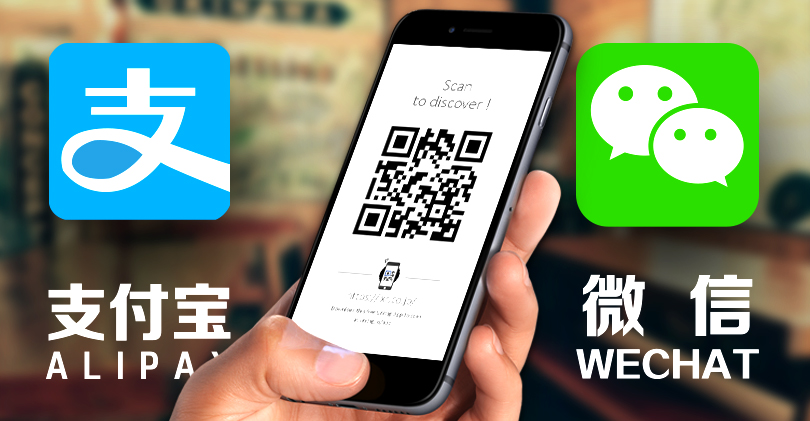
In terms of mobile payments (Alipay, WeChat Pay, etc.), they are clearly preferred by Chinese consumers due to the following reasons such as convenience and efficiency.
For in purpose of placing the order and paying for the purchase, Chinese users can be staying literally at the home, office, or anywhere. However, this type of payment should be engaged in your marketing strategy since it is the most efficient way to gain more customers.
3. Key Opinion Leaders are vital to increasing your brand’s promotion
Key opinion leaders (KOLs) are established online figures that have gathered large followings around themselves. They are highly influential and can be recruited to represent a business or brand. Different KOLs allow you to tap into specific communities and demographics, providing quality targeted exposure.
The best approach for KOLs is to use a number simultaneously on different platforms to post about the brand, this has an ‘echo chamber effect and supports the legitimacy of the brand if numerous figures are posting.
Ensure posts and comments by KOLs are closely monitored, merely posting is not enough, you need to fuel conversation and respond to queries. KOLs do not act as customer service representatives, you a simply using their service to reach their community and influence them via their reputation.
It is vital to keep your consumers entertained by live videos and be always creative in enabling various campaigns, involving Key opinion leaders (KOLs). When it comes to KOLs they have gathered large followings around themselves. Moreover, businesses or brands can recruit them due to the fact that they have a high influence. Specific communities and demographics can be targeted by different KOLs by providing quality targeted exposure.
It should be clear that considering investing in key opinion leaders (KOLs), you need to choose Chinese influencers due to the fact that they can directly link your brand with your targeted audiences.

The main point related to KOLs, the best approach, in this case, is that they should have created an “echo chamber” effect by using simultaneously the number of different platforms to post about the brand. That effect supports the brand’s legitimacy if lots of influencers are posting.
For instance, Burberry has invested in such key opinion influencers as Kris Wu, Mino, and Hoony from the K-pop band Winner and Chinese actress Zhou Dongyu in order to engage their millions of followers.
As a result, as soon as Kris Wu was tapped by Burberry, his fans started being more aware of the brand, calling out to one another to buy Burberry products. Consequently, it reflected that Burberry’s headquarters made the right choice in Wu. Consequently, choosing the right KOL is the main point.
4. Customize your social media
Online community building is important in the Chinese e-commerce market. Today in our fast-growing digital society, the brand’s image is not static. Therefore, in order to turn customers into followers more and more significant for brands to build up their own online communities. Additionally, the more successful brands operate such a strategy, the more likely that they will stand out in the fierce competition in the retailing sector.
Since China has the most active social media market. Even more, on average Chinese citizens spend on average spend around 3 hours a day online. More importantly, surveys have shown that more than half of Chinese internet users have actively participated in discussions about corporations online.

Chinese citizens spend an average of nearly 3 hours a day online, and young people in China have more friends online than they do offline.
WeChat is a great tool for Chinese market entry, it’s a strong Launchpad for quality content with its 877 million active daily users. It’s China’s number one social platform so having a presence here and engaging with your target is very important. You can create an official account for communications, build a following and push notifications to followers. It also allows for ease of payment via their Wallet service as well as a host of other functions from gaming, to e-commerce stores, to location services, dating & even taxi-hailing. WeChat packs a punch for any new business in China.
The best piece of advice for WeChat is simply, to keep it social. This is a conversational platform and the Chinese expect (more so than we do in the west) to have personal interactions with brands on platforms such as WeChat, businesses are seen more as individuals so ensure you closely engage with users.
A MARKETING AGENCY TO ENTER THE CHINESE MARKET
Please contact our expert team at GMA for more information on Chinese marketing strategy and how it can help your business. We look forward to discussing your project.