
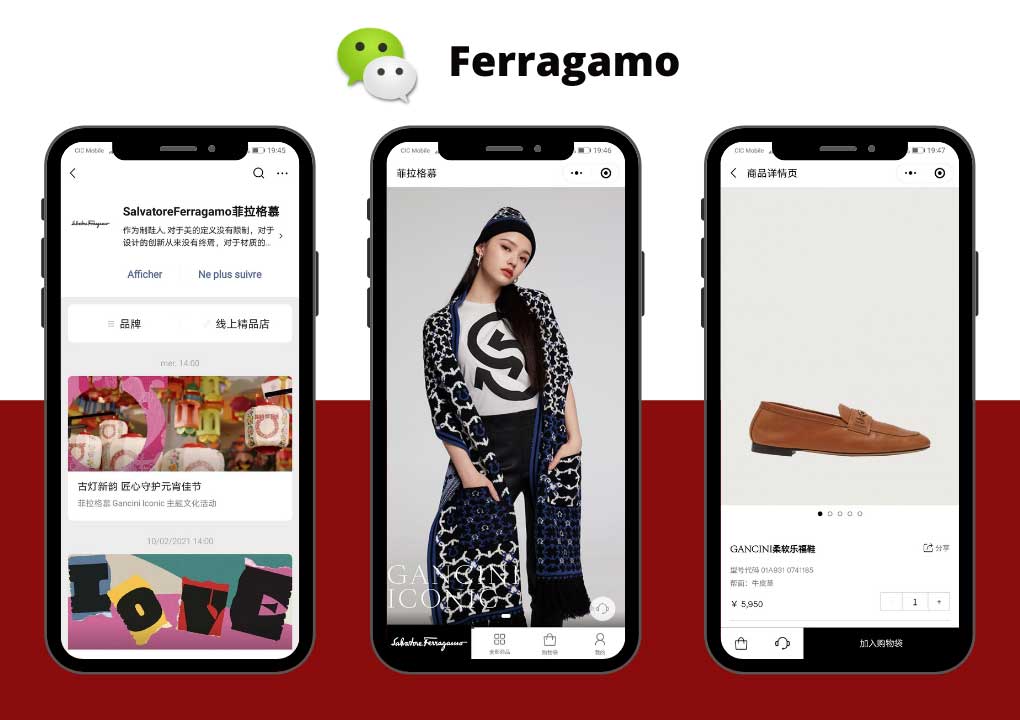
Almost every luxury brand I meet in Shanghai already has a WeChat official account. That box is checked. What is not checked, most of the time, is whether anyone reading that account understands what it is for.
I have sat in enough brand review meetings, on both sides of the table, to know the pattern. A house launches an account, posts for a few months with energy, then hands it to whoever has time that week. Six months later the follower count looks fine on a slide. The account itself reads like nobody is home.
The fact that most luxury brands are on WeChat is old news at this point. The real question, the one nobody puts on a slide, is how many of those accounts are actually run well. From what I see client to client, not many.
Mistake One: Treating the Account Like an Internal Bulletin Board
The clearest sign of a badly run account is that it reads like it was written for the marketing department, not the customer. New hire announcements. Internal award ceremonies. A recap of an offsite in Hangzhou. None of this tells a shopper why she should open the app on a Tuesday night.
A WeChat account needs a job description, the same way a magazine section does. Is it here to announce product drops. Is it here to build the brand story. Is it here to service existing clients with styling advice and appointment booking. Pick one lead job and let everything else support it. An account trying to be a company newsletter, a sales channel, and a fan page at once ends up being none of those things well.
Mistake Two: Posting Daily Just to Stay Visible
I understand the instinct. Silence feels like disappearing. So a junior social hire fills the gap with reposted trend news, generic “good morning” content, or a roundup of something the brand had nothing to do with. The account stays active on paper. It does not build anything.
A reader who follows a fashion house wants that house’s point of view, not filler dressed up as consistency. One sharp post a week, tied to something the brand actually did or made, beats five posts of noise. Frequency without relevance just trains your own followers to stop opening your pushes.
Mistake Three: No Rhythm, No Voice
This is the one closest to my own background. At Vogue China, every section had a publishing calendar and a voice guide, and both were treated as non-negotiable. You knew what day the beauty column ran. You could tell the fashion desk’s tone from the market desk’s tone without checking the byline.
Most WeChat accounts I audit have neither. Posts appear on a Monday one week, skip two weeks, then land on a Thursday. The copy swaps between formal brand language and casual intern voice depending on who wrote it that day. Readers notice inconsistency even when they cannot name what feels off. A fixed schedule and one editorial voice, even a simple one, does more for retention than any single clever post.
Mistake Four: Ignoring How WeChat Actually Distributes Content
A post to your subscriber list is only the first stop. WeChat’s recommendation layer, the one that pushes articles into “Discover” and into readers’ social graphs when friends tap the like button, decides whether a piece travels past your existing followers. Brands that never study this get blindsided when a normally solid account suddenly posts a piece that reaches a fraction of its usual audience, or the opposite, when a modest post outperforms everything for reasons nobody planned.
The teams that manage this well stop treating each post as a lottery ticket. They look at which formats and topics travel through shares and likes, not just which ones get scheduled, and they adjust the mix instead of shrugging at the drop.
Mistake Five: Watching the Wrong Number
Follower count is the easiest metric to report and the least useful one to manage by. I have seen accounts with a large, static follower base and a shrinking open rate, because nobody was checking click-through, dwell time, shares, or comments underneath that headline number.
Those four numbers tell you the truth a follower count hides. Click-through tells you if the headline and cover image earned the tap. Dwell time tells you if the piece was actually read once opened. Shares and comments tell you if it earned a reaction worth having. A smaller account with strong numbers on those four fronts is doing better work than a large one coasting on a subscriber count from three years ago.

The Layout Mistakes Nobody Mentions in the Strategy Meeting
This part rarely comes up when brands discuss WeChat, and it should. A detailed breakdown from Yiban on common account-operation errors lines up with almost everything I see in client accounts, and most of it sits at the level of basic formatting, not strategy.
- Unedited, watermarked images. Product photos lifted straight from a press kit or a competitor’s post, watermark and all, sitting inside a luxury brand’s own feed.
- Inconsistent image sizing. One post with a full-width banner, the next with a cropped square, the next stretched and blurry after upload. Nothing about the layout signals a considered brand.
- Color chaos. Templates that mix five or six different colors and heading styles in one article because “colorful” was mistaken for “engaging.” Restraint reads as premium. A scattered palette reads as an intern with a template library.
- Headlines built to list everything. Titles stuffed with every keyword and detail the writer wanted to include, or dressed up with phrasing readers have to decode. A headline should earn the tap in one read, not require translation.
None of these require a bigger budget to fix. They require someone who checks the article on a phone screen before it goes out, and who is willing to cut a headline down until it says one clear thing.
What Good Looks Like
- One stated job for the account, and content that supports that job first
- A fixed posting rhythm the audience can learn, even if it is only once a week
- One voice, documented somewhere, that survives a change in who is writing
- A habit of checking shares, comments, and dwell time, not only follower growth
- Clean, consistent image sizing and a short, restrained color palette
- Headlines a reader understands on the first pass, with no decoding required
None of this is complicated. It is the same discipline a magazine desk applies to every issue: a calendar, a voice, a standard for what goes to print and what gets sent back. WeChat just punishes the absence of that discipline faster, because the reader can tell within one open whether anyone is actually running the account.
If your brand’s account has the follower count but not the engagement to match, that gap is almost always fixable, and rarely with a bigger budget. Our team works on exactly this with premium and luxury brands through our WeChat account management, built alongside the wider digital marketing work we run for clients in China. If you want a second set of eyes on your account, get in touch through our contact page.
Source: Yiban

Cindy Zhang is the CEO of Fashion China Agency. Fifteen years inside Chinese fashion and luxury: editorial and PR at Vogue China, brand-side experience with Guerlain, then the luxury segment at Xiaohongshu. She now leads a Shanghai-based team working exclusively with premium and luxury fashion brands in China. Read her full story →