
The Health Market in China
The Chinese government actively encourages and promotes the participation of external and private providers within its health service. This relatively new prerogative results directly from the population’s aging and a new demand in higher quality health services. What hence goes without saying is that the services provided in Chinese hospitals leave much to be desired.
As a consequence, a large amount of attractive opportunities have opened to health service professionals interested in basing themselves in China.
The aging Chinese population increasingly requires health-care that is more specifically adapted to the elderly.
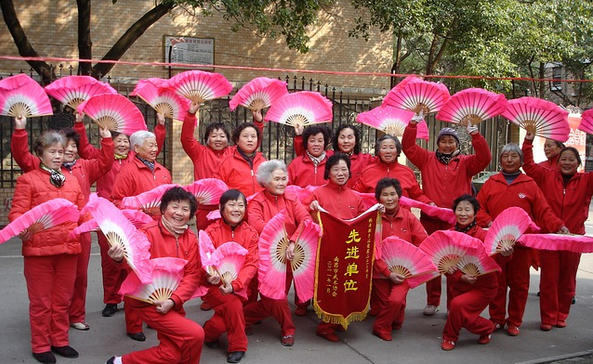
According to Austrade, in February 2014, China is inhabited by over 200 million citizens aged over 60, a whopping 15% of the total population. The related health sector is proportionally underdeveloped and does not meet the demand. This being said the Chinese government has set the objective of increasing its number of beds or available services by 7 to 8 million by 2020 and to increase the number of health specialists for that sector by 10 million, 10 times more than the current workforce.
A significant growth in the sector amounted from the investment from external private sources and du the before-mentioned governmental encouragement of these types of investments. However much still remains to be wanted for.
Dental health care and services
Dental problems represent a huge problem in China, and illnesses linked and caused by dental cavities are significantly present in the countries overall health issues. Dental care does not traditionally occupy an important position in China, and the industry for it is therefore still underdeveloped. There is however, a growing interest this sort of healthcare by the portion of the Chinese population that benefits from larger revenues than the average. Furthermore, the government has adopted a very positive stance when it comes to encouraging development in the services provided for dental care.

In China, dentists are very few and are located far from each other. There are on average 100 dentists per 1 million people, letting you imagine that it would probably be difficult for 1 dentist to take care of 100000 patients alone.
These factors render the idea of exporting dental health care specialists and other services to China not only possible but also very profitable and abundant in demand. It is crucial for the Chinese government to increase its healthcare services in order to keep up with the standard set by other countries.
The other health service sectors
China therefore represents an incredibly open market for not only dental health care but for all types of health care imaginable. With the immensity of its population and the growing of its economy and standards of life, its only way to catch up its health services rapidly is to import. Responding to this Chinese demand for healthcare would involve exporting all types of services for the invalidated such as brail, equipment for the elderly or disabled, wheelchairs and such.
Australia’s contribution
The Australian government has announced that, following agreements passed with the Chinese government, it would export a large amount of health care services but also health care research results so as to aid the Chinese government in developing faster. This leads on to important developments in specialised sectors such as neurology, physiotherapy and others of the sort.
China’s growth within the world scene
With China’s progress towards being a world-leading country and economy, the undeveloped health sector it and its people suffer from, are bound to be a crippling factor when compared with other developed societies. It is for this reason that modern health care, which has historically been under privileged in the country’s traditional values, must now be increased at a rate that competes or even exceeds the rate of growth of its economy. How else to build an economy and a modern population when the appropriate health services are not readily available? It would not stand in comparison with China’s world competitors.

What’s about digital in health care sector?
Factor key of Success:
Health care represents an open market you can target through social media and SEO on Baidu.
First, being aware about Chinese social media is one of the most important factors. You have to know how to optimize your wechat campaign, by example, in order to reach a large audience.
Be very carefull with your e-reputation on Chinese social networks, these latter are very influent amongst Chinese people, whose use to “word of mouth” before buying and using a product, before trusting a brand, and so before trusting you.
Finally, let influencer and press speak about you and discover your company, you can also do some interviews.
As patients trust their doctor, your target must be able to trust you. Work in this way is hard, but your presence on social media, on website, on Chinese internet (SEO on Baidu) will be yours best chances of success.
Need a Partner in China ?

You can also work with a specialized agency, such as Gentlemen Marketing Agency whose will be able to help you and lead your digital marketing campaign.
2 comments
gg_huanyi
Thanks to this article we can figure the Chinese longevity secrets out! Hahahah more seriously, I am interested to know more, feel free to contact…….
Tom
Really good article; We have a group for health professional that connect medical need and business… welcomed to join.