

Search engines are a huge part of our lives, and while most people in the Western world think of Google as the be-all and end-all of search engines, that’s not always the case. In China, there are a number of different search engines that people use, each with its own unique features.
If you’re doing business in China or just interested in what’s going on in the world’s most populous country, it’s important to know about these search engines. Here are 5 of the biggest Chinese search engines you need to know about.
Chinese search engine market landscape
Chinese internet users overwhelmingly access the internet on their mobile devices, with a staggering 99.6% using their phones or tablets. This means that app-based internet usage is the norm, with users accessing a variety of platforms to meet their specific needs.
Unlike in the West, Chinese internet usage is highly fragmented, with tech companies keeping their content within their own ecosystems. As a result, traditional search engines like Baidu don’t have access to content from platforms like WeChat or Xiaohongshu.
Despite these differences, most Chinese internet users still rely on traditional search engines in China for general information and to search for content from traditional websites. While search engines may not dominate internet usage in China, they are still an important part of the online landscape.
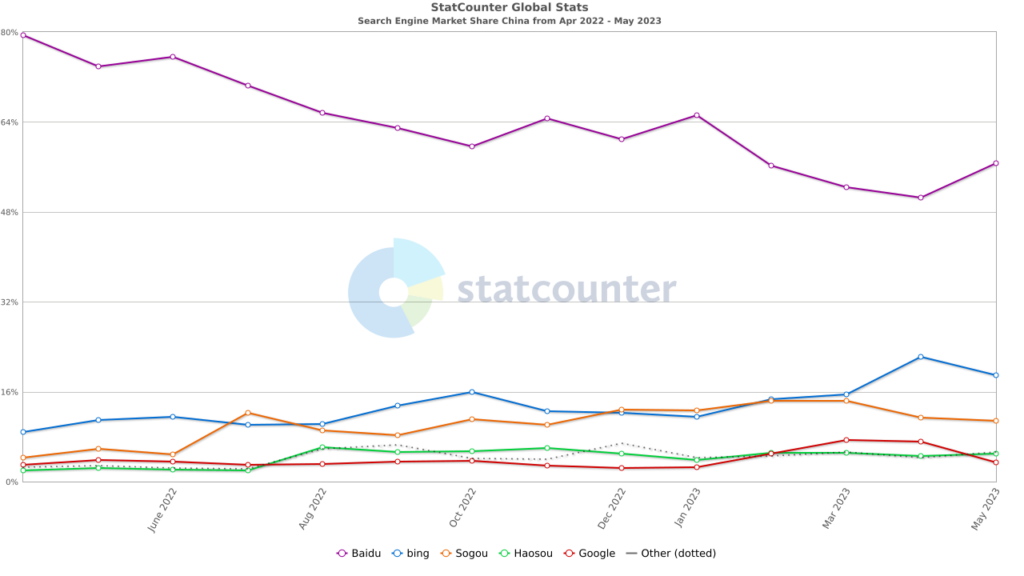
As you can see in the graph above, Baidu is the definite leader in the search engine market, with a 57% market share as of 2023. Other popular Chinese search engines include Sogou and Haosou, as well as Google and Bing, which are Western companies. The revenue in China search engine market is expected to reach 197 billion yuan in 2023.
In this blog post, we will talk about the most popular search engines in China, excluding the international players. In addition to Baidu, Sogou, and Haosu, we will also introduce two more; Shenma and Youdao.
Why Not Just Use Google?
This is a question most businesses and marketers ask when they first enter the Chinese market. However, you’ll soon realize that the Chinese search engine landscape is starkly different from the West. This difference is most pronounced in the absence of popular search engines like Yahoo and Google as mainstream Chinese search engines.
Their absence results from what we call the Great Firewall, which restricts access to foreign Internet companies to operate within Chinese servers. While it’s still possible to access Google, the most popular search engine in the West through virtual private networks (VPN), their use is scarce and often illegal.
That’s why it’s better to adapt your SEO strategies with these Chinese search engines in mind.
1. Baidu aka China’s Google
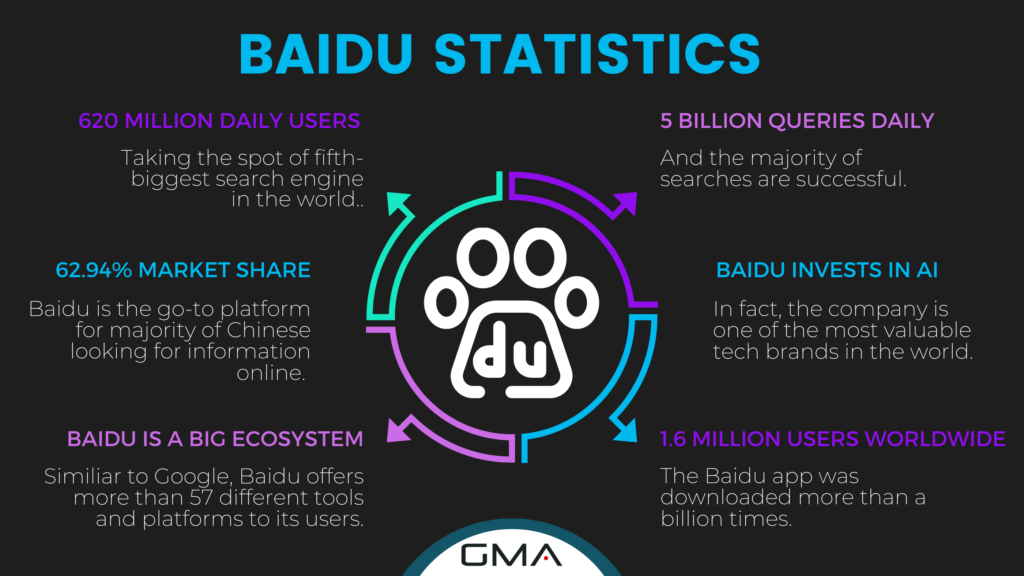
This list wouldn’t be complete without the most prominent Chinese search engine: Baidu. In fact, it’s the most used search engine tool in China, which earned the nickname “China’s Google.”
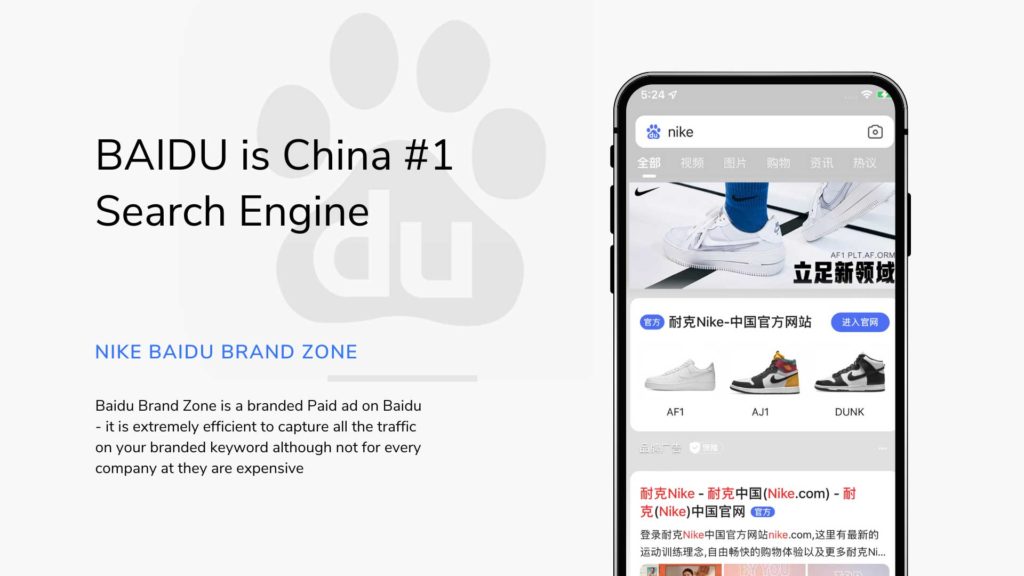
Because of its prominence in the search engine market, you should center your search engine optimization strategies around it. After all, ranking high in Baidu will be a boon, especially if you’re just starting out in the Chinese online market. However, suppose you’re a seasoned search engine marketer for Google. In that case, you may want to rethink your strategies when ranking for Baidu.
Focus on Your Metadata
Unlike Google, Baidu emphasizes your website’s metadata, much more so than the content itself. Your metadata information should include:
- Meta descriptions
- Title tags
- H1 and H2 tags
- Meta Keywords
You need to ensure that you have metadata in place if you want Baidu’s web crawlers to find your website information.
Furthermore, it would help that you use Mandarin in your website content and metadata since Baidu won’t prioritize your website if it’s encoded in any other language. So, if you have an already established website but in a different language, then it would help if you translated all your metadata and content to Chinese Mandarin.

Optimize Your Homepage
A differentiating feature of Baidu is its emphasis on your homepage. Therefore, you must optimize your homepage as much as possible. You can ensure that your content is Mandarin and link as many of your pages as possible to your homepage’s header and footer.
This way, you’re giving all your other content a free boost in Baidu ranking. In fact, if you have a lot of landing pages that you wish to boost, then you can certainly use your homepage to do that.
Tracking Your Baidu Keyword Performance
Let’s say that you finally got the hang of it and used simple Mandarin keywords to optimize your new Chinese website. What’s next?
We recommend using the Baidu Index and the Baidu Live keyword feed to keep track of your keyword performance. The Baidu Index can help you find out search trends among Chinese users and gain insights into netizens’ demands, such as public opinion and media. On the other hand, the Baidu Live keyword feed similarly monitors the trending keywords in real time.

2. Shenma
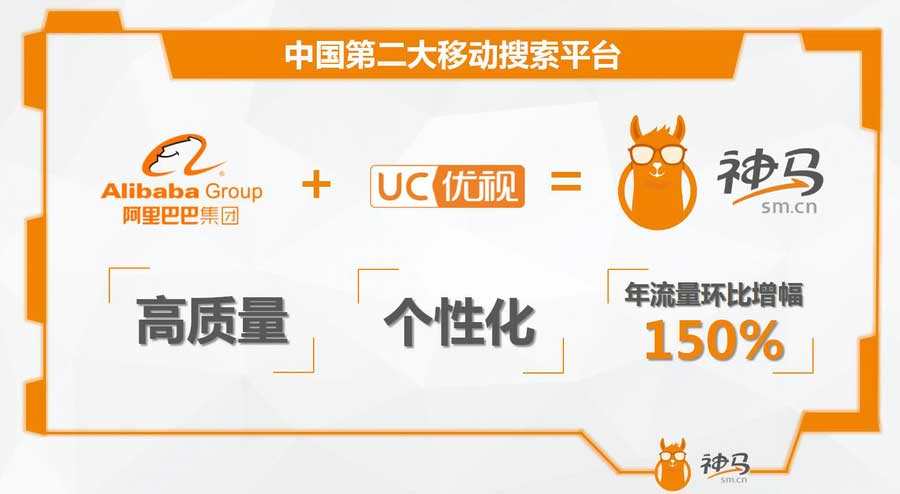
Mobile phones have become part and parcel of our daily lives, and the Chinese market is no stranger to this trend. This is where Shenma, a Chinese search engine, comes in. With its mobile-first approach as a Chinese search engine, Shenma is backed by the Alibaba group and used by UC Browser as its default search engine.
The User Interface
Shenma’s search engine interface is pretty unique. For instance, you can browse different categories in Shenma and navigate to the most popular searches within that category. Furthermore, these searches will even provide users with relevant search terms with links.
This presents advertisers with an opportunity to keep recommending their own products to people that search for an item. For instance, if you search for gardening tools, Shenma will have a category of related items such as fertilizers and plant feeders.
Navigating below, you’ll see even more subcategories for related search terms.
The UC Browser Effect
You may be wondering why you should keep Shenma in mind when planning for other Chinese search engines. The answer lies in its deep integration with one of China’s most significant mobile search web browsers, the UC Browser. Since Shenma is a mobile-first Chinese search engine, UC Browser’s 500 million users is certainly a market that you don’t want to miss out on.
UC Browser’s Shenma integration includes:
- Instant search results
- Favorite Categories
- Location-based app recommendations
Advertising on Shenma
Product and application advertisements dominate Shenma search results. However, this only works with keywords related to products, such as when searching for shoes, smartphones, or washing machines. You’ll then see various products on the search results linked to their respective online eCommerce stores, such as Taobao and JD.com.
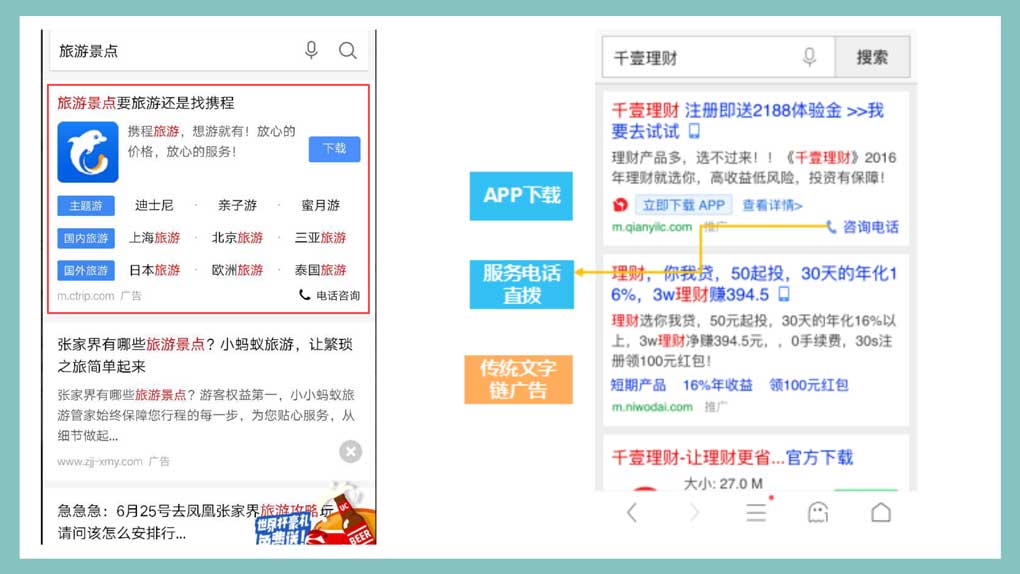
If you’re searching for things that don’t relate to products, you’ll have no problem competing with paid ad results. Instead, you’ll see organic search results populating the page.
Therefore, if you’re a company that wants to build a strong e-commerce presence, then targeting mobile audiences that use UC Web Browser can be an excellent strategy. After all, this Chinese search engine can send user traffic straight to your e-commerce stores if they search for relevant product keywords.
3. Sogou
The third-largest Chinese search engine, Sogou, is backed by Internet giant Tencent and is the default search engine for Tencent’s QQ mobile browser. Like Shenma, Sogou also benefits from the large user base of QQ, which is as many as 900 million users.
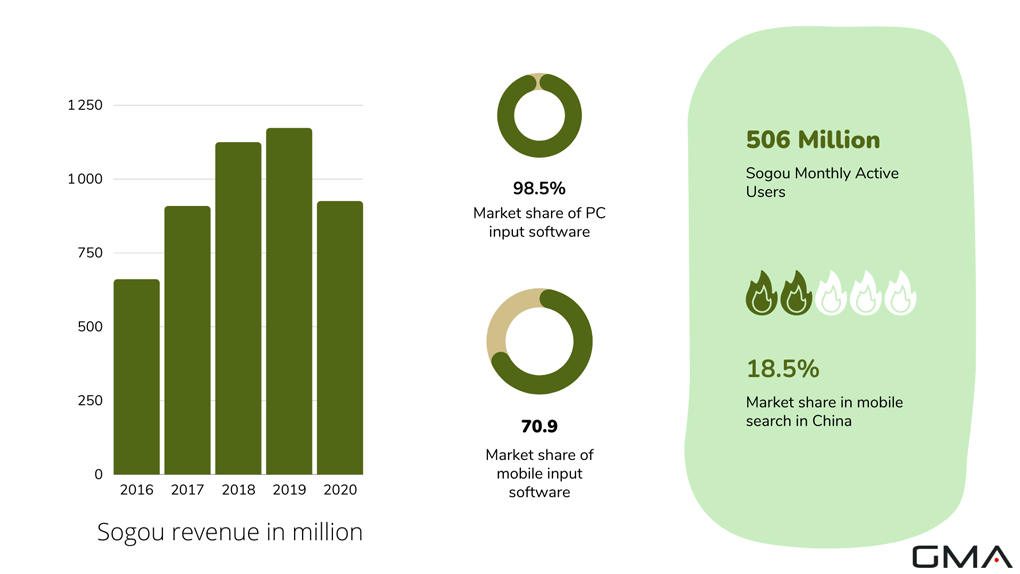
Suppose you’re not familiar yet with the Sogou search engine. In that case, you may be more familiar with Sogou, the pioneer of pinyin inputting in China. Because of its unique advantage as a keyboard developer, Sogou can gain insights into Chinese consumers’ most popular phrases and words. Thus, using this Chinese search engine can reap rewards, especially if you’re looking far into the future.
Artificial Intelligence and Voice Search
While Baidu is still the undisputed top dog in the Chinese search engine industry, Sogou tries to make its mark by delving into AI and voice recognition. Their efforts in investing in these technologies have proven to be beneficial. For instance, their voice recognition technology can translate English and Chinese and has a high accuracy rate.
Furthermore, Sogou has also leveraged its experience in pinyin inputting to craft better and more relevant search results for users.

WeChat Integration
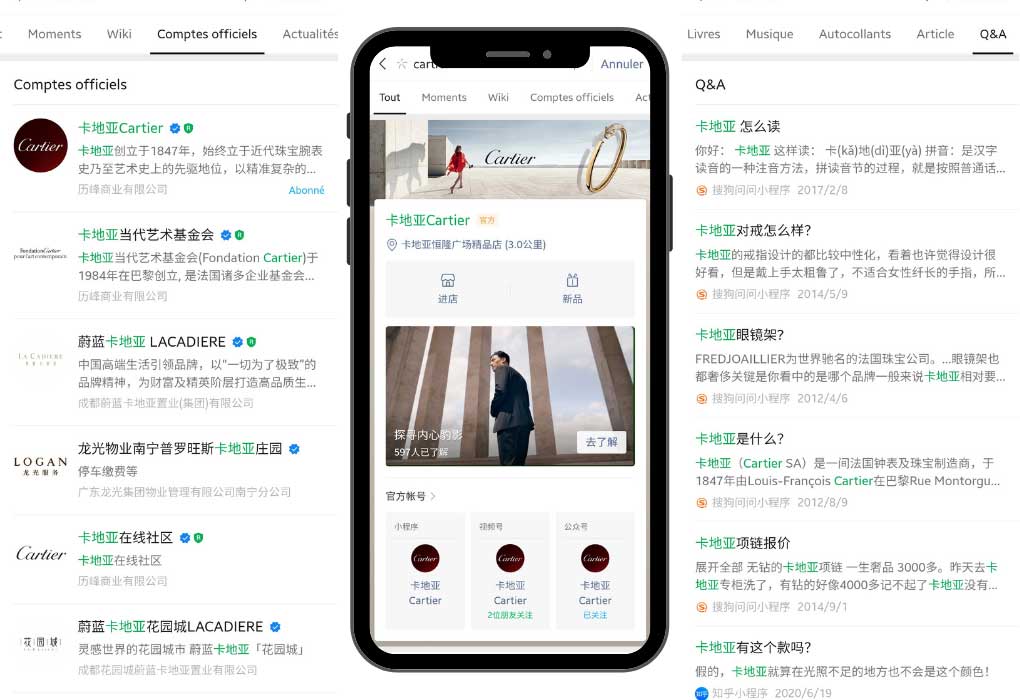
If you’re looking for a Chinese search engine that can index your WeChat content, you can use Sogou. In fact, this Chinese search engine pioneered the indexing of WeChat, which means that they have unmatched technology to tailor-fit results based on WeChat data such as account balances and shopping history.
Sogou is perfect for businesses that want to leverage WeChat data in crafting their digital marketing strategies. You should look no further than Sogou if you wish for an intelligent Chinese search engine.
4. Youdao
Youdao is a relatively new Chinese search engine that was founded in 2007. However, despite its young age, Youdao proved to be one of the preferred search engines for Chinese consumers because of its unique approach to browsing searches.
Learning Mandarin With Youdao
This search engine is perfect for users that want to learn other languages. For instance, if you’re an English person who wants to learn Mandarin, you can use this Chinese search engine to translate web pages, news, blogs, and basically anything on the internet. That’s why aside from being a search engine, Youdao is also regarded as an educational tool.
Consequently, you can see that they’re heavily banking on this competitive advantage by releasing online courses, learning apps, and educational games.
Affluent User Base
While not as large as Baidu, Youdao’s 700 million user base comprises young under-24 users who are students or earning high incomes per month. International businesses can tap into this segment by leveraging this Chinese search engine.
5. 360 Search / Haosou
The final Chinese search engine on this list is the 360 search engine. Also called Haosou, this Chinese search engine emphasizes privacy and web security. As a result, many tech-oriented users gravitate towards this 360 search for its advanced security features.

Made by Qihoo 360
For those unfamiliar, Qihoo 360 is a large internet company in China that also owns 360 Browser. Like most Chinese top search engines on this list, 360 Search benefits from this association, especially since 360 is the default search engine of 360 Browser.
Furthermore, unlike other computers globally, Chinese computers come with a 360 browser preinstalled on them. This means that 360 Search will be used first by most Chinese users when they open their computers for the first time.
Safer Than Baidu
Because of its advanced web security features, 360 Search gained a niche following with tech enthusiasts since it’s safer than most Chinese search engines like Baidu. Furthermore, it also offers traditional search engine features like news, videos, images, and music.
Respect China’s Regulations
Of course, this comes without saying, but you have to respect China’s internet content and behavior policies. If you want to avoid penalties on search engines, then be cautious about claims like Taiwanese Independence or any content that goes against the interest of the CCP.
In need of search engine marketing in China?
If you’re interested in creating a website or optimizing your content for Baidu or any other search engine in the Chinese market, we can help you do it right!

We are a China-based marketing agency specializing in digital marketing and e-commerce solutions. During more than 10 years in the industry, we helped many companies create a website and optimize it for respective search engines in the Chinese market.
We offer many web services, including market research, web design, licensing, localization, Baidu SEO and other search engine optimization, and many more, depending on your target audience, goals, and budget.

Drop us a request, and we’ll respond as soon as we can, to schedule a free consultation and start working on your brand’s visibility in China!

1 comment
Maksud Safstrom
Beidu Dear Jack
News entertainment fashion in English Arabic Chinese Testy luxury Hindi Bengali Songs Etc
TaiduTigers TaiduTiger 🌹🌲
Facebook YouTube Vision mission CTN CNA ⛵ TMC Tiger media Corporation Net Work
Intel Zoom the life.
International integration for Chinese Visitors.
Maybe it is already done.
If not I need suggestions from Parents 🐦
Kind regards maksudsafstrom@gmail.com
Sweden M. +46 0766011711