

You may have missed this one. It arrived without a keynote, without a press kit, and without a single fashion trade headline. It is still the most important thing that happened to brand marketing in China this year.
What actually changed
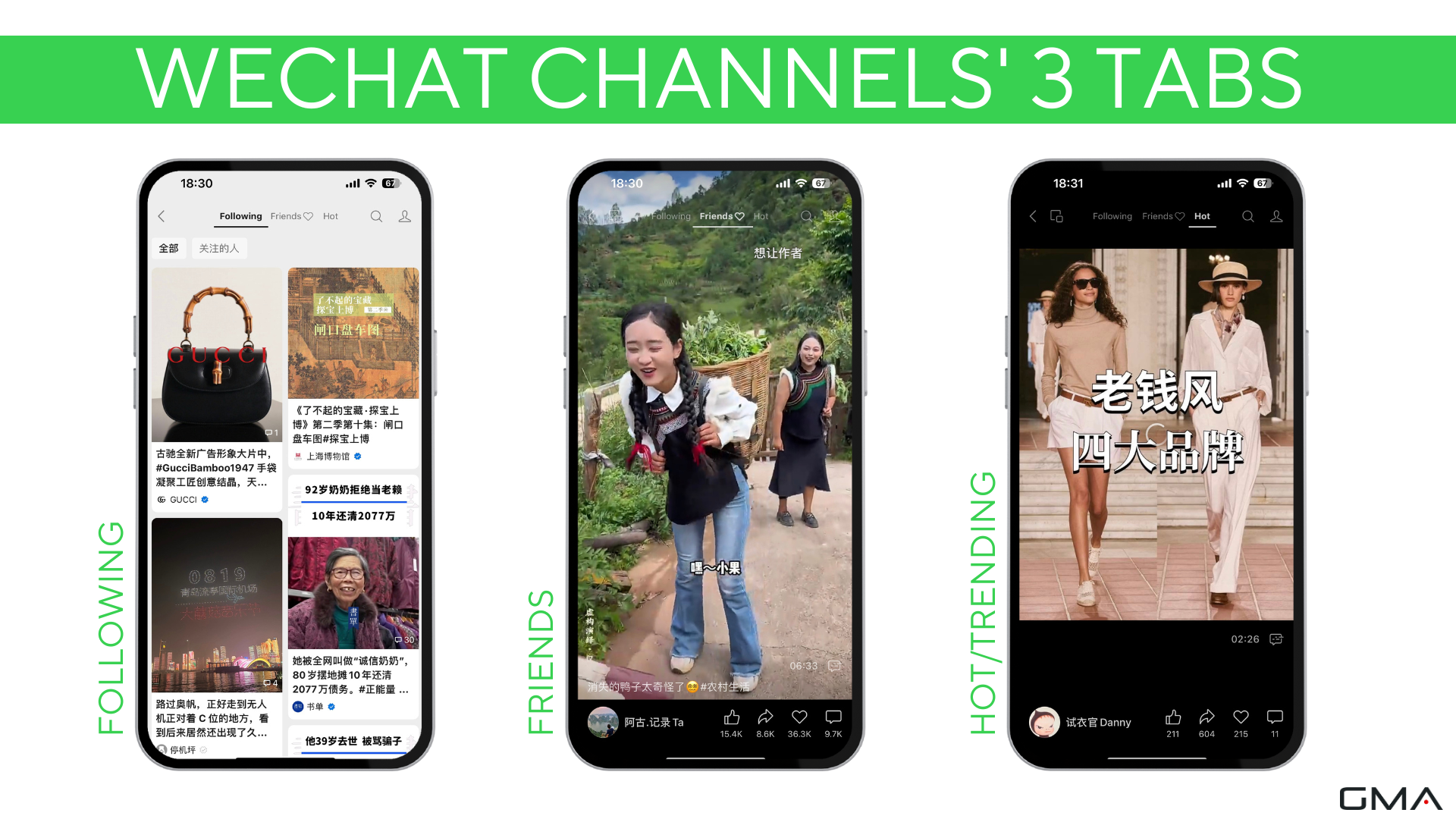
On 10 August 2026, the Tencent Cloud developer community published a technical note confirming what merchants in China had been feeling since spring: Official Accounts (公众号), Mini Programs (小程序), WeChat Store (微信小店) and Channels (视频号) no longer operate as four separate products. WeChat’s AI upgrade rolled out across the whole environment and rebuilt the way traffic moves between them.
The note is blunt about why. Before, traffic could not pass between the four ports. Operating costs stayed high, the conversion path stayed long, and customers leaked at every handover. Each property had one strength and one hole. Official Accounts had content but almost no transaction ability. Mini Programs had service but no natural audience. WeChat Store had the products but nothing pointing at them. Channels had reach but could not hold anyone.
Three concrete pieces sit underneath this. First, an account can now be bound in both directions between Channels and an Official Account, initiated from either side, as long as the two accounts share an administrator or the same legal entity. That is documented in WeChat’s own developer documentation. Second, WeChat Store was upgraded so a shop and its products circulate across Official Accounts, Channels short video and livestream, Mini Programs and WeChat Search, instead of living inside the livestream room. Third, WeChat pushed hard into local commerce, tying Channels, Mini Programs and WeChat Pay into in-store and delivery offers for physical merchants.
Context for the scale: WeChat reported 1.432 billion combined monthly active users in March 2026, in Tencent’s first quarter results.
What the announcements do not say
This is plumbing. That is exactly why nobody wrote about it.
A new filter, a new sticker pack, a new AI assistant with a name: those get covered. A change in how account bindings work does not. And yet the binding change is the one that moves money.
Look at the precedent. WeChat’s walled garden phases have always followed the same shape. The platform opens a door, a small number of operators walk through it early and take disproportionate share, and then everyone else arrives two years later to find the cost of entry has quadrupled. That happened with Official Accounts around 2014, when a brand could still build a list of hundreds of thousands of readers for the price of a decent content team. It happened again with Mini Programs after 2017, when the early builders got organic search placement inside WeChat that later cost real money. Each time, the winners were not the brands with the best creative. They were the brands that shipped early and connected things.
The mechanical implication of 2026 is narrow and worth stating plainly. A brand can now own the entire path inside one app. Discovery happens on Channels. Purchase happens in the Store or the Mini Program. Retention happens in the Official Account, the community groups and the CRM sitting behind them. At no point does the brand rent attention from a marketplace that also sells its competitors, takes a commission, and keeps the customer data.
That is not a small thing for a European fashion house that has spent a decade paying Tmall for the privilege of speaking to its own customers.
Now the part that stays unclear, because it matters. Nobody outside Tencent knows whether the AI-driven recommendation actually gives meaningful organic reach to brand content, or whether it still quietly favours individual creators. The reasonable read, based on how Channels has behaved so far, is that creator content still wins the feed and brand content still needs paid support or a KOL partner to get initial velocity. The integration removes friction from the funnel. It does not hand you free traffic at the top of it. Anyone telling you otherwise is selling something.

What this means for your brand
Here is what I would check first if I were you: who owns your WeChat account, and how many hours a week do they actually spend on it?
In most international fashion and luxury teams the answer is uncomfortable. WeChat sits with one part-time person, or with an agency retainer that covers two articles a month. It is treated as the newsletter channel. Meanwhile the four properties that would need to be connected are owned by three different departments, sometimes on three different legal entities, which is precisely the thing that blocks the binding.
This affects you if you sell in China and hold your own Official Account, whatever your size. It affects you less if your China business is entirely wholesale through a distributor who owns the customer relationship. It affects you most if you are mid-sized, premium, and have been told your only route is a Tmall flagship you cannot afford to staff.
The window is roughly twelve to eighteen months. Early movers on WeChat have always had that much before pricing catches up.
The cost of doing nothing is not zero, and it is not a missed campaign. It is that your competitors build a first-party audience inside the same app where your customer already spends her afternoon, while you keep paying for reach on a platform that rents it back to you every quarter.
One example, kept vague on purpose. A European accessories brand we work with had a Channels account with modest follower numbers and a Mini Program store nobody visited. The two were run by different people who had never spoken. Binding them, then adding product links inside the Official Account articles that were already being published anyway, moved Mini Program traffic from a trickle to a steady daily flow within one quarter. No new content budget. No new campaign. They connected things they already owned.
How to do it, in order
The sequence matters more than the effort.
Step one: verify entity alignment. Check that your Official Account, Channels account, Mini Program and WeChat Store sit under the same verified legal entity or share an administrator. If they do not, this is a legal and administrative job before it is a marketing one, and it can take weeks. Start here.
Step two: bind Channels and the Official Account. Two-way, from either side. This is a settings change, not a project.
Step three: connect WeChat Store to both. Products should be reachable from an article, from a video, and from search. Test each path yourself on a phone, as a customer would, not on a desktop preview.
Step four: fix the destination. Most Mini Program stores built before 2023 were designed as catalogues. They now need to work as a checkout that a customer reaches from a fifteen-second video. Load speed, size guides, payment, returns policy in Chinese. Boring, decisive.
Step five: close the loop. Buyers go into a community group or a CRM tag. Otherwise you are back to renting attention.
Can your team do this in house? Steps two and three, yes, if someone in China holds the admin credentials. Step one usually stalls without local legal help. Step four is where in-house teams tend to underestimate the work, because the Mini Program was built by a vendor who has since disappeared.
Our WeChat agency team in Shanghai handles this kind of connection work, and it is honestly more audit than campaign. If the store side is where you are weakest, that sits closer to our e-commerce work in China. If you want the Channels content side handled properly, the social media side is a separate conversation.
One open question
Here is where I think reasonable people disagree. If WeChat’s recommendation engine keeps favouring individual creators over brand accounts, then this integration mostly benefits KOLs and small merchants, not luxury houses.
So: is a fully connected WeChat setup genuinely a first-party asset for a premium fashion brand, or is it just a nicer funnel that still depends on renting a creator’s audience to fill it?
I would like to hear from people running this in practice. Tell me what your numbers say.