

In China, the womenswear market is growing rapidly and is becoming increasingly competitive. Many fashion brands are vying for Chinese consumers’ attention, so how can your brand make a statement and stand out from the rest? In this article, we’ll explore some tips to help you build a successful fashion brand in China. Read on to find out more!
Discover the keys to success and a complete introduction to this topic through our latest video:
Womenswear in China – The Fierce Competition Behind the Numbers
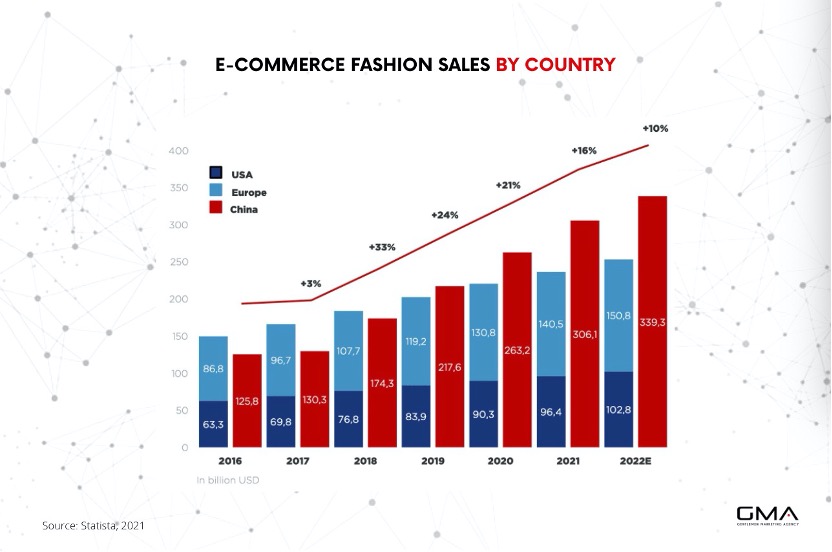
In 2022, the fashion industry growth is driven by China and the US. The Covid 19 epidemic accelerated the growth of online shopping and e-commerce in China. In this el dorado, e-commerce is the key sales channel. Since 2019, China has been occupying first place in the fashion industry and is selling more than the US and Europe combined.
Womenswear is the Number 1 Category for Apparel Sales
From a sales share of 12.58 billion USD in 2016 to 2022 nearly tripled to reach 339.3 billion USD, more than even the European market and the US market combined. According to the report, China holds a very important position in the fashion industry’s apparel sales industry and can even be said to occupy the first place. As you can see, the apparel industry has a lot of room for brands development in the different product categories, which brings huge room for growth.
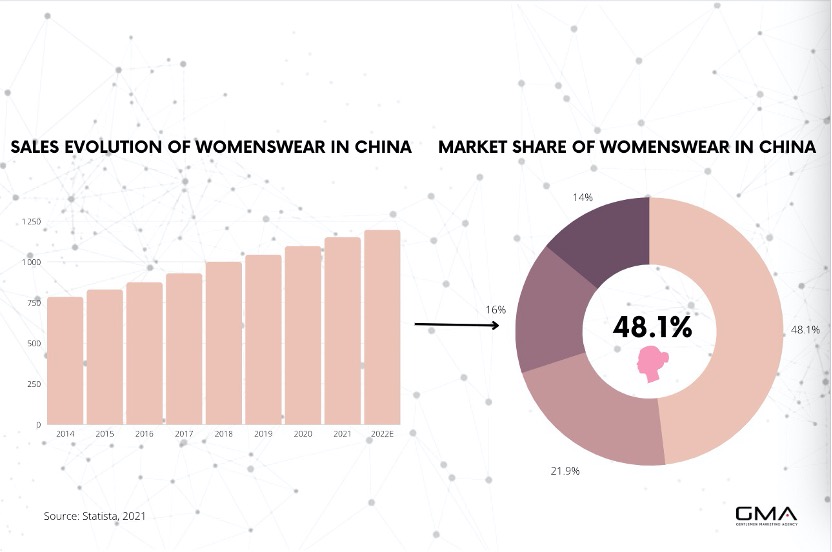
From 2016 to 2022, online sales in the Chinese fashion market can be said to have doubled. However, the purchasing power of Chinese women is not to be underestimated, womenswear stands in the top category, with women’s apparel alone occupying 48% of the major category compared to men’s apparel, children’s apparel, and sportswear, which are at the back. In contrast, women’s apparel has seen a mere 5% annual growth rate from 2014 to date.
However, in the face of fierce competition, how to accelerate the development of the women’s clothing industry and expand the market is worthy of our consideration.
Why has the China Fashion Industry growth rate for womenswear become sluggish?
From this strong gap, it is easy to see that the Chinese market under women’s clothing in the development process has a very fierce competitive environment.
Irresistible factors of the epidemic on market growth
There is an old Chinese saying “衣食住行” clothing, food, housing, and transportation, “衣”clothing is in the first place, and its biggest rival is “food”, which has almost complete competitiveness.
It is worth mentioning that Shanghai in 2022 experienced a big crisis, the epidemic caused the whole city to be on lockdown for several months, which also led to basic meals becoming a problem, and people did not have enough food. People started to give up on fashionable dressing and started to hope for more food instead, which was also a major blow to the clothing industry.
Many foreign and Chinese brands, but a limited market
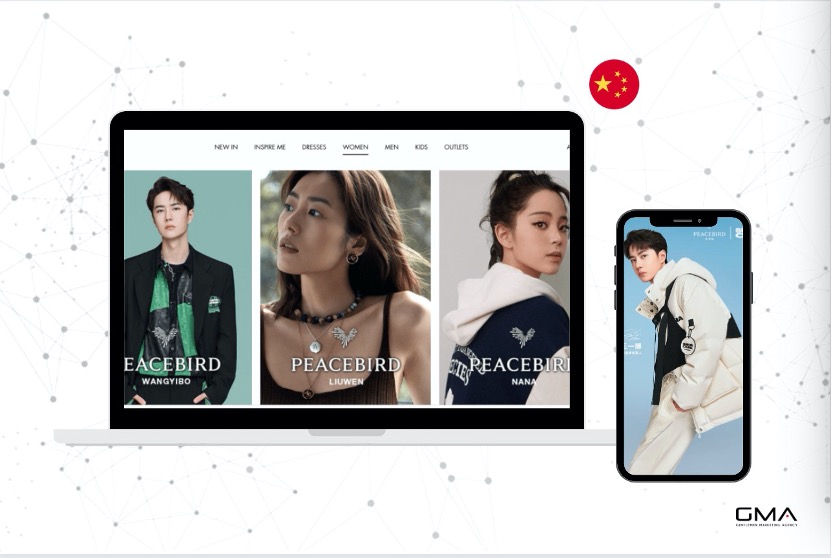
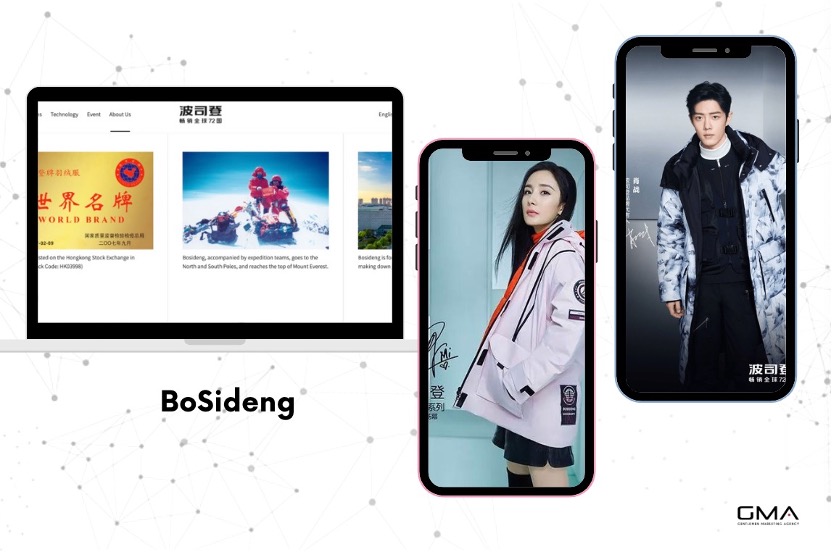
In a completely competitive market, the rise of many brands, both domestic brands (Pacific Bird, Bo Si Deng) and international brands from Japan, Italy, and the US(Uniqlo / Zara and other fast fashion brands) in the Chinese market, for the women’s fashion industry, the market is fiercely competitive and constantly saturated, so wanting to grow substantially has become a difficult thing.
Therefore, if the women’s fashion industry wants to usher in its own spring, it needs to be more multidimensional to measure women’s purchasing drivers and understand what they really need. 1.4 billion people in China, which can be said to be a multi-ethnic country, people always want to be different and express their personalities and reflect themselves through clothing.
When 65% of Chinese consumers believe that beautiful and creative designs can inspire them to buy, I think the monotonous white shirt and jeans combination is no longer accepted by most of the market.
How to Market Fashion Brands in China? – Marketing strategies that work for China
Marketing your fashion brand in China can be a daunting task, but with careful planning and execution, it can be a huge success. Here are a few tips to help you get started:
- Undertake market research to identify the right channels for you, and your competitors (domestic and foreign brands)
- Localize your content and create high-quality, relevant materials specifically for the Chinese market.
- Enhance your online visibility by SEO (search engine optimization) and establish a strong Chinese social media presence to create brand awareness.
- Consider using an experienced local marketing partner to help you navigate the challenges and make the most of the opportunities in China’s vast and complex market.
1. Why does a Fashion brand entering China need a Market Research & Market Monitoring
Market research is important for a fashion brand that wants to enter the Chinese market because it provides insights into the preferences of consumers there. It can help a brand determine what styles are popular, what colors are in demand, and what price point is appropriate. Market research can also help a business understand the competitive landscape and identify opportunities to differentiate itself.
There are many ways to conduct market research, but some common methods include surveys, focus groups, and interviews. Secondary data sources such as magazines, reports, and books can also provide valuable insights. A good market research plan will take all of these different sources into account to get a well-rounded view of the Chinese fashion market.

Monitoring the competition is essential for any business, but it is especially important in China’s dynamic fashion & luxury industry. Brands need to know what innovative new designs and collections their competitors are debuting so that they can stay ahead of the curve.
2. Fashion Brands in China have to localize their goods and their marketing content
In order to appeal to Chinese customers, fashion brands often need to create localized content, this means tailoring your branding and messaging to appeal to Chinese consumers in a way that resonates with their cultural values and preferences. And it is also true for your products.
This is where market monitoring comes in handy for fashion brands in China. For instance, one of the lasted trends in China’s fashion market is Guochao aka taking elements of Chinese culture/ traditional clothes and incorporating them into collections designs.
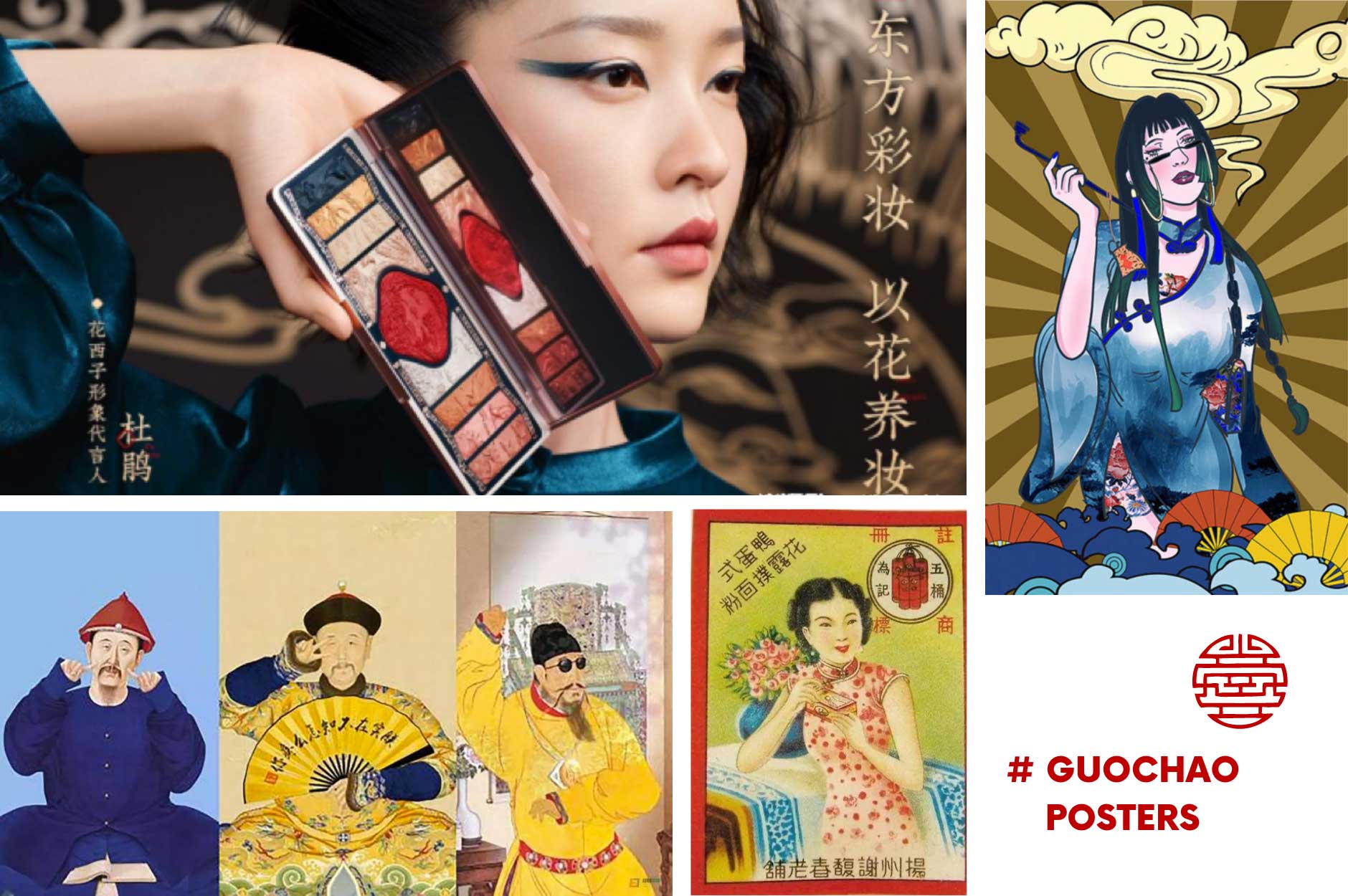
However, a foreign fashion brand wanting to play in that realm will have to be extra careful, as for Chinese consumers there is a fine line between what is considered being done in good taste, cultural appropriation, or worse mockery. Here at least, Chinese fashion brands have an edge 😉
3 Reach out to Chinese Women Fashion consumers with SEO & Social media marketing
Why does a fashion brand in China need SEO?
Baidu SEO is important for fashion brands doing business in China because Baidu is the dominant search engine in China. More than 80% of Chinese internet users use Baidu as their primary search engine, so if you want to reach Chinese consumers, you need to make sure your website is optimized for Baidu search.
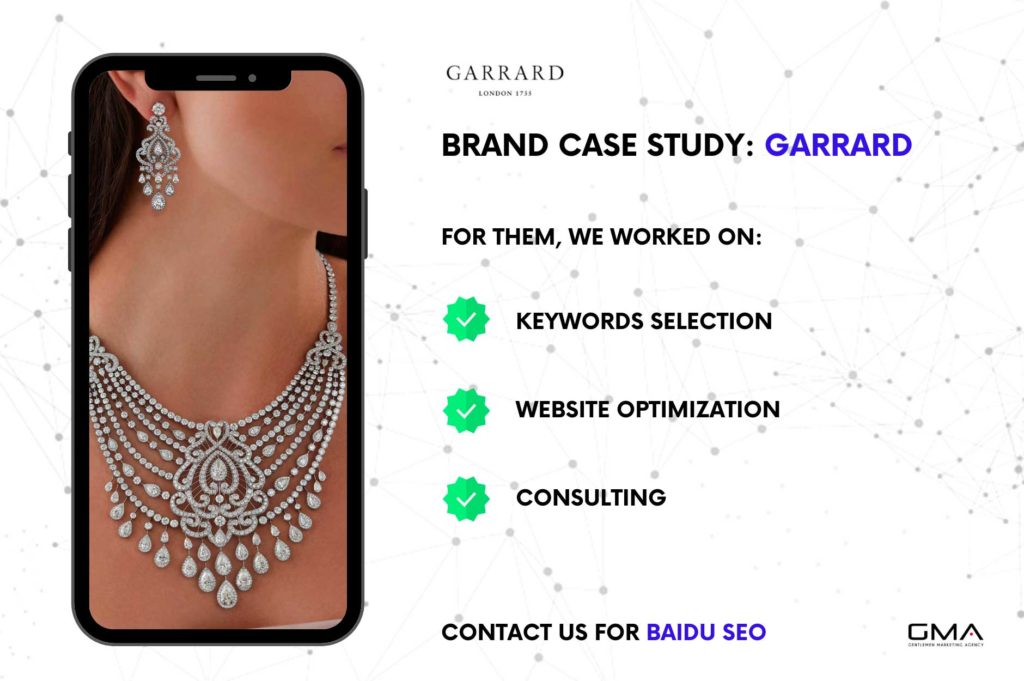
Chinese consumers are increasingly using search engines to research and buy products online. In fact, 78% of Chinese internet users conduct product research online before making a purchase. So if you’re not ranking well on Baidu, you’re missing out on a lot of potential sales.
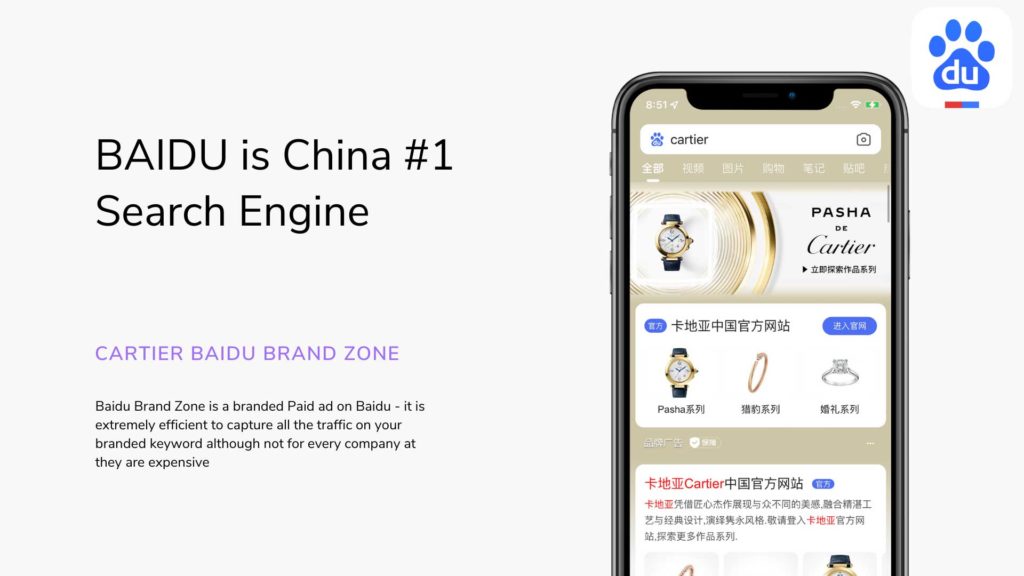
Bonus: with your own website optimized for Chinese, you can run Baidu paid advertising such as brand zone which, although expensive, ensures that all your sales channels and website will be displayed ahead of all the competition by taking most screen space in a customized fashion!
Why is social media marketing so important for foreign brands in China?
Social media platforms are incredibly popular in mainland China and offer a great way to connect with Chinese women fashion consumers directly.
Brands can interact with their customers on social media networks by sharing photos and videos, answering questions and comments, and running contests and giveaways.
This personal connection is very important to Chinese consumers and can help build loyalty between brands and customers.
Social media is just like in the west, where Chinese fashion influencers (key opinion leaders) and their followers hang out. Kols Marketing is, for international fashion brands, another great tool to build trust with Chinese consumers in a country where word-of-mouth has a real impact on sales.
Gain More Loyal customers in the Chinese market with WeChat Marketing
Although WeChat may be best known as a messaging app, it is also an incredibly powerful tool for luxury brands looking to build customer loyalty in China. WeChat allows brands to create official accounts through which they can interact directly with customers and followers. Brands can use Wechat to share product information, launch marketing campaigns, and even provide customer service.

WeChat also provides some unique features that can be leveraged by brands to build loyalty such as VIP cards, membership, rewards & gifts, and so on. With a WeChat services account, brands can also post weekly articles that are akin to newsletters, great for nurturing.
Fashion and Luxury brands have also widely adopted WeChat mini-programs and stores that offer a wild array of functionalities to brands and users
Reach your Target Audience (TA) with a Xiaohongshu / Little Red Book
When the creative and innovative new Chinese and wild camping style takes off, it is inevitable that the women’s wear category will also welcome a very bright future. The Chinese market wants to get significant growth.
Xiaohongshu officials can launch a post-competition of new Chinese style dressing vs camping style dressing, set up corresponding rewards, mobilize more girls to post dressing notes, and choose quality content to be popular.
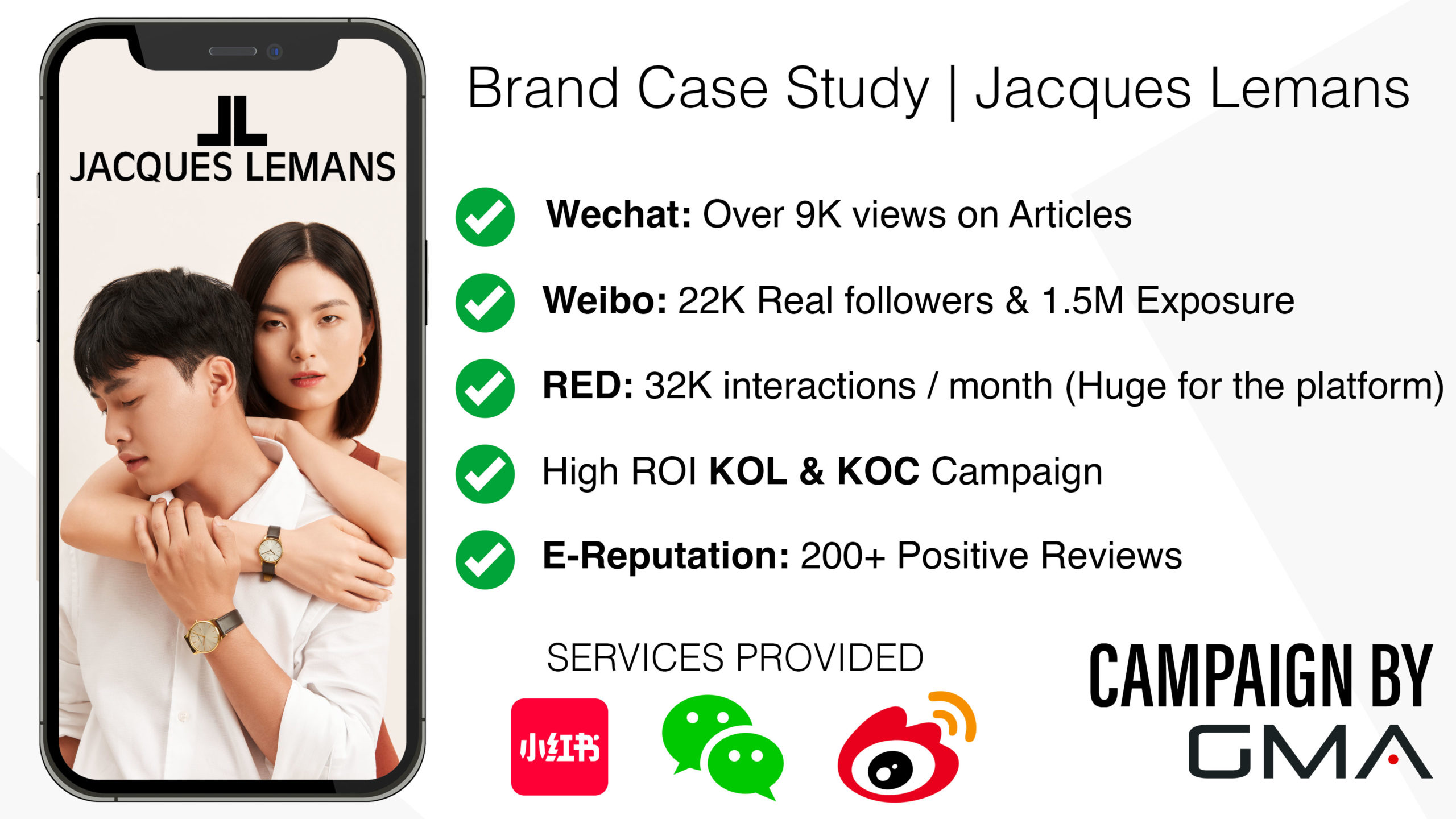
For example, Jacques Lemans on Little Red Book launched a campaign to promote the Austrian watch brand with tag challenges such as watch recommendation and workplace dressing, using digital media to make people more aware of the brand image.
Reach out to Chinese consumers with Creative Content on Douyin / TikTok
In recent years, TikTok short videos are very popular, not only with video content for entertainment promotion but also with the boom of live streaming with goods, which is no different from a platform for promoting new styles of women’s clothing.
Nowadays TikTok allows anchors with more than 1 million fans to directly publish links to Taobao and Tmall e-commerce products in their video posts. TikTok has enabled links to small programs, boosting the platform’s status as a social commerce solution for brands.
Louis Vuitton (LVMH) took advantage of this feature in its Christmas campaign, providing viewers with links that take them directly to its website to pre-order advertised products. The luxury industry is entering a new phase of development, and if brands want to keep up with the trends and catch the next wave, TikTok is a platform to consider.
Use Collaborations and Co-Branded Campaigns to Stand Out
There are several reasons why collaborations and co-branded campaigns can be effective in promoting a fashion brand in China.
- First, by partnering with another company or brand, you can tap into their customer base and reach a larger audience.
- Second, these types of partnerships can help add credibility to your brand, especially if you team up with a well-established company.
- Collaborations and co-branded campaigns can also be used to create buzz and generate excitement about your brand.
Ultimately, these types of initiatives can help you broaden your reach, build trust with potential customers, and create a more sustainable business in China’s competitive fashion market.
A new idea is a cross-border collaboration: women’s clothing + Hmong embroidery (ethnic elements)
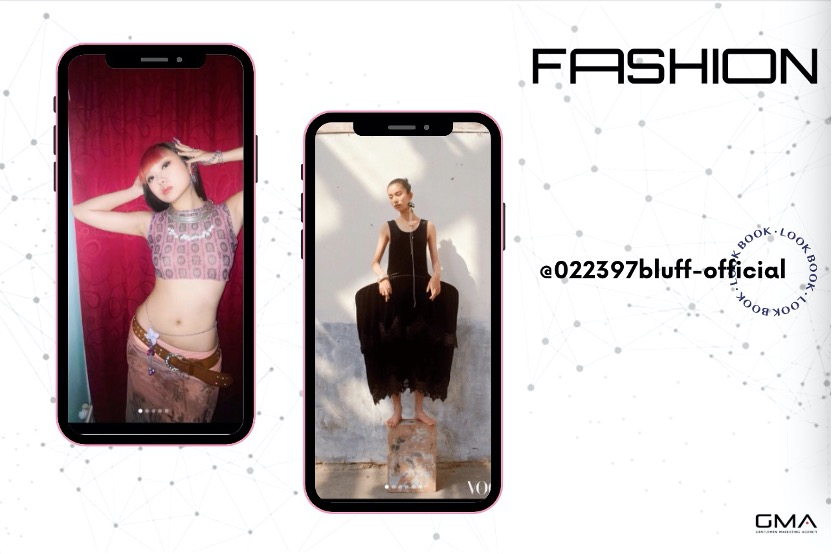
022397bluff-official
Here to introduce a Chinese artist’s brand @022397bluff-official, founded in 2019, with 6490 followers and 216 posts on Instagram, 022397 is a blue and BLUFF is an attitude to life. Designer Xi Ming comes from Guizhou, China as a Miao (Chinese minority), and graduated from the French school in charge of trade unions in Paris.
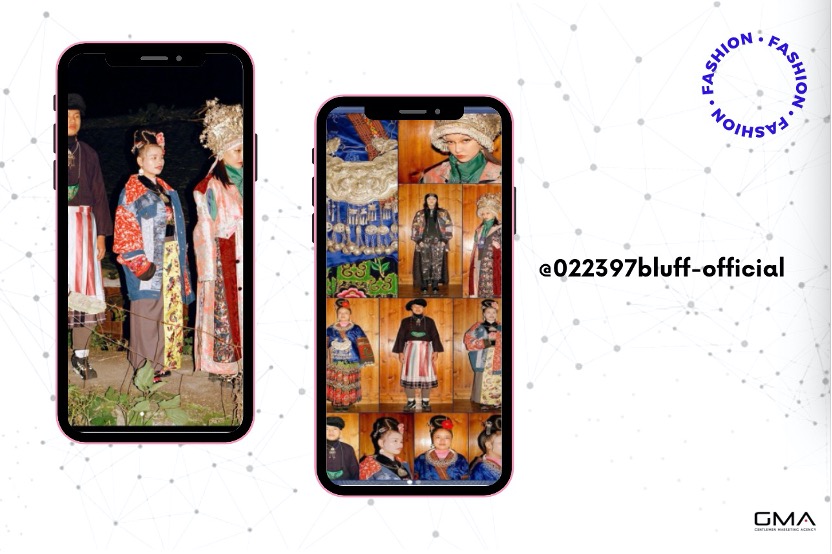
His designs use Miao embroidery as the main element and use Miao culture to interpret the theme. Miao embroidery, full of ethnic elements, with its exaggerated and grotesque patterns, reflects the intermingling of man and God.
The combination of ethnicity and the world, the combination of Miao embroidery and fashion, allows more people to see the beauty of fashion and reflects the cultural confidence of the younger generation.
Feng Chen Wang
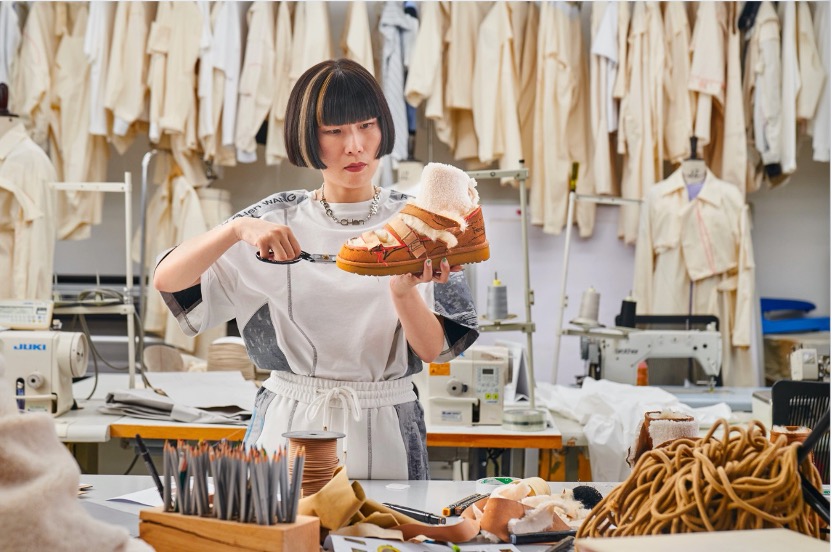
Another Chinese designer, Feng Chen Wang, is also a new generation of young design talent, having graduated from the Royal College of Art in 2015. Her designs have an institutional and functional unisex style, and the brand has been positioned with – Modern Future, Diversity, and Authenticity.
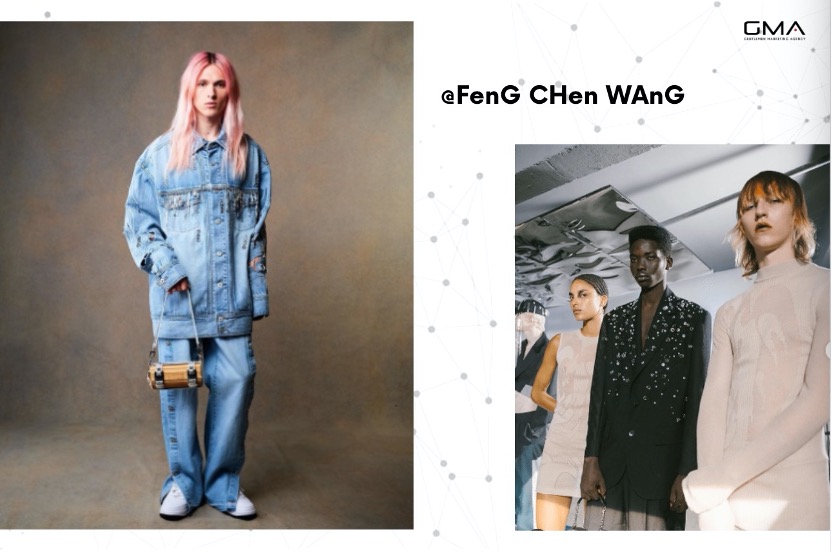
Her eponymous brand has 131,000 followers on Instagram and her work was a finalist in the 2016 LVMH Designer Awards.
Jacques Lemans x GMA: Our New Marketing Campaign with Miao Design
When we partner with fashion brands, we always combine efficiency and creativity. By efficiency, we mean we apply what we know is working well in China. For Jacques Lemans’ case, we worked on a China assortment with watches incorporating highly appreciated materials like mother-of-pearl, ceramic, or Swarovski crystals. By creativity, we mean exploring new paths and trying new actions. And this is where this new campaign takes place.
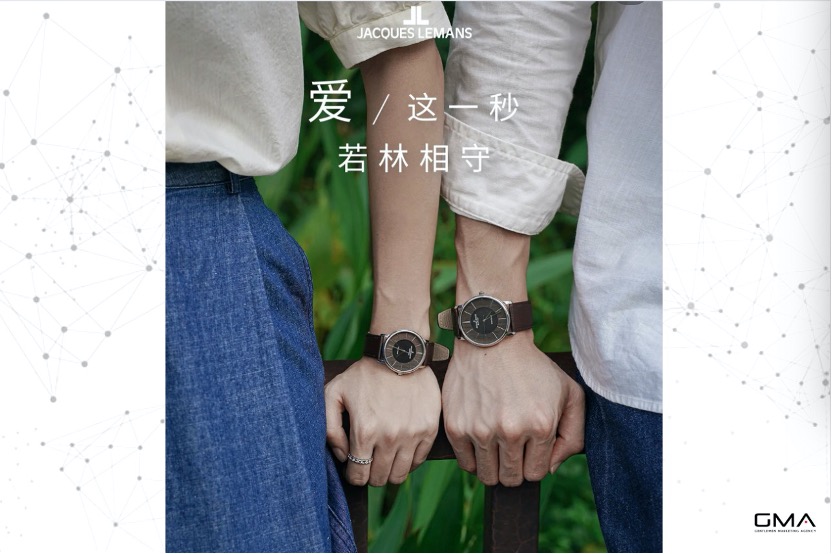
We are currently running the social media accounts and e-commerce flagship stores of the brand in China (WeChat, Weibo, Xiaohongshu, Tmall, and JD). To maintain the pull and excitement after 1 year, we decided to extend the assortment with a couple of new references, including the “Peacock Watch”.
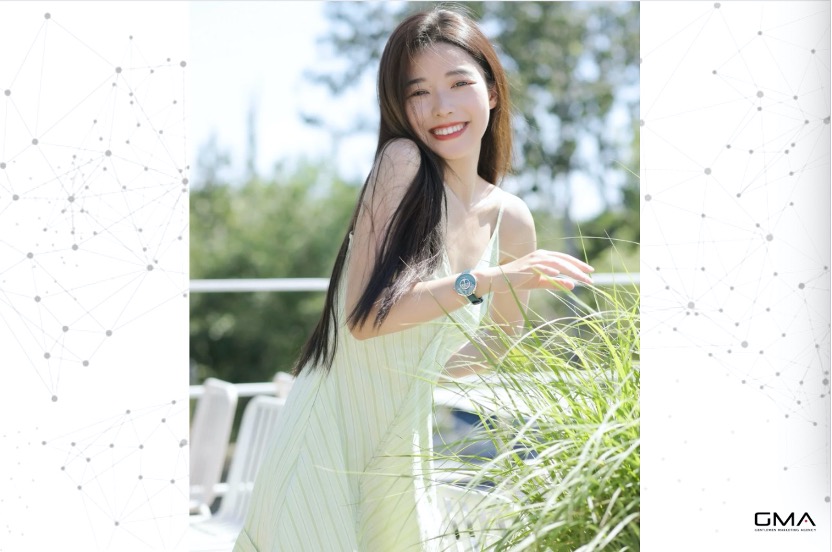
The Peacock watch is aiming at targeting the Miao minority located in the Southern provinces of Guizhou, Yunnan, Sichuan, Hubei, Hunan, etc. For the Miao and the Ming Dynasty, the peacock is an important symbol incorporated in clothes, necklaces, earrings, etc.
For this minority, the peacock is representing beauty and dignity. The peacock is often spreading its tail as a symbol of power and beauty, spreading the civilization since Chinese people consider the peacock as the kindest and most intelligent bird, bringing happiness.
The Peacock watch from Jacques Lemans was the perfect tribute to this unique symbol.
Want to Market Women’s Clothing in China’s fashion market? Contact us
There are many opportunities to develop your business in the Chinese Fashion space. Thanks to the digitalization of society and new marketing tools. However, in China, you really need to gain market share faster than others, because the pace of business is very fast, and the environment is constantly evolving.
GMA is a digital marketing agency that specializes in the Chinese market specifically and has a deep understanding of it. Because we understand how to efficiently market your company in China in accordance with the market and Chinese consumers, we have created numerous successful projects.
Our staff is knowledgeable about the most recent technological advancements and market trends, enabling us to offer you a comprehensive range of services to help foreign companies; from:
- Market research, market monitoring, and consulting
- marketing strategies and marketing operations
- Registration on Chinese e-commerce platforms, e-commerce management, and logistics
contact us to know if your brand is a good fit for China
1 comment
Zaya
hello
We have a portfolio of Sport brands we are looking to distribute to China for wholesale orders – Not dropship.
Contact us