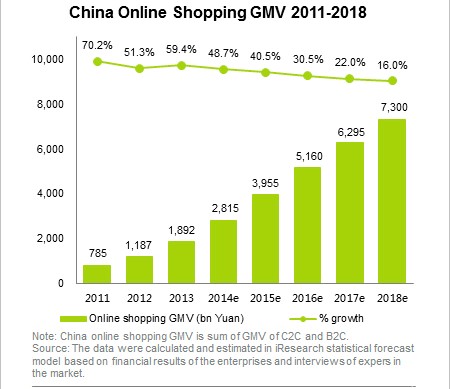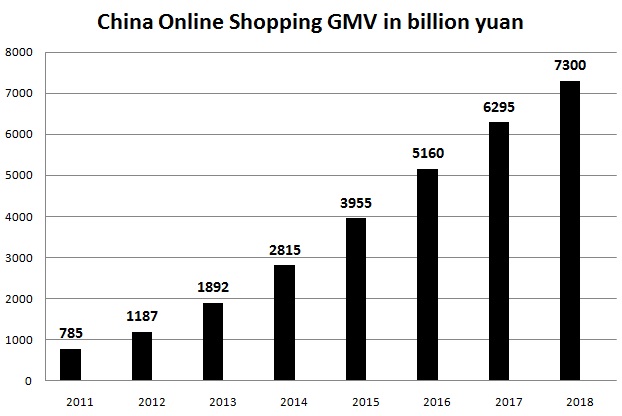

China’s fashion market is now worth over $854 billion in ecommerce alone. Online accounts for more than 50% of all fashion sales. Yet luxury flagships are opening faster than ever in Beijing, Shanghai, and Chengdu. So if you’re a Western fashion brand deciding where to put your budget, the answer is not “online or offline.” It’s about picking the right mix for your brand type.
The Size of the Opportunity in 2026
China’s total ecommerce market hit approximately $2.4 trillion in 2025. Fashion is the single largest category, making up roughly 34% of all online retail revenue. The fashion ecommerce segment alone is valued at around $854 billion in 2026 and is growing at close to 20% per year through 2033.
Competition is fierce. But the upside is real: 300 million consumers on RedNote, 750 million daily users on Douyin, and 1.1 billion monthly active users on WeChat. Every major platform has built shopping directly into the experience. The question is no longer whether to sell online in China. It’s which platforms, in which order, for which brand positioning.
For a broader look at what is driving Chinese consumer behavior, see our China fashion market overview.
Douyin: Where Fashion Moves Fast
Douyin is the live commerce engine for fashion in China. Its ecommerce GMV hit 3.5 trillion yuan in 2024, up 30% year-on-year. Fashion and apparel alone generated over 800 billion yuan GMV on Douyin in 2025.
Live commerce drives 40% of Douyin’s ecommerce revenue. A key shift: 70% of livestream sales now come from brand-run or merchant-run streams, not celebrity influencers. Brands that invest in their own live studios and trained hosts are seeing consistent returns. ECDB projects Douyin will become the number one global online apparel platform by 2026.
For accessible and mid-market brands, Douyin is the highest-volume channel available right now.
RedNote (Xiaohongshu): Where Trust Gets Built
RedNote has 300 million monthly active users. Its audience skews female, urban, and upper-income. Fashion is the second most popular content category on the platform. Average order values in fashion on RedNote run 450 to 600 yuan, higher than most platforms at that audience size.
The number that matters most: 90% of RedNote users say content on the platform directly influences their purchase decisions. Conversion rates from RedNote posts average 4 to 6%, roughly three times higher than Weibo.
RedNote sits in the middle of the consumer journey. Shoppers discover a product on Douyin, then go to RedNote to read real reviews before buying. If your brand has no presence on RedNote, you are invisible at the moment of decision.
What Fashion Content Looks Like on RedNote
- The “haul with context” post: A KOL photographs five to seven pieces from one brand, styled on their own body in a real setting. Each item has a price, a product code, and a short comment on fit and quality. The caption includes specific search tags. This format drives direct click-through to the brand’s Tmall or WeChat mini-program.
- The brand campaign note: A brand posts a series of editorial images tied to a seasonal campaign, with each image accompanied by a product description written in conversational Chinese, not marketing copy. Gucci did this around Milan Fashion Week SS2025, generating a 5x increase in brand-related searches and an 11% rise in user-generated content.
- The “how to style” tutorial: A fashion influencer creates a five-image carousel showing one hero piece styled five different ways. Coach used this format in partnership with KOL Mr. Bags for a “Shanghai Nights” handbag collection, driving over 500,000 engagements and a 90% sell-out rate.
For niche and designer brands, RedNote is often the best first entry point into China. The community is smaller than Douyin but more engaged, and the content stays searchable for months.
WeChat Mini-Programs: The Owned Channel for Luxury
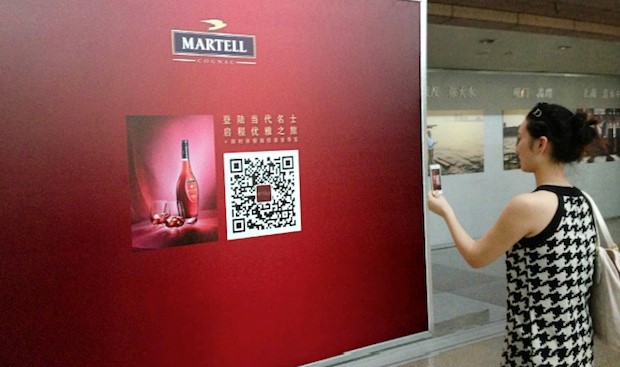
WeChat mini-programs processed 3 trillion yuan GMV in 2024. Conversion rates reach 25% in fashion retail, the highest of any channel in China. Over 90% of major international luxury brands, including Louis Vuitton, Chanel, Hermès, and Burberry, run WeChat mini-program stores.
For luxury brands, WeChat is the owned-ecosystem play. It handles VIP access, loyalty programs, limited-edition drops, and private client services. Burberry used its mini-program to sell limited editions during London Fashion Week, connecting Chinese buyers to real-time drops without them leaving the WeChat app.
A strong social media strategy for fashion brands in China almost always includes WeChat as the CRM layer, even when other platforms drive top-of-funnel awareness.
Physical Stores: The Comeback Is Real
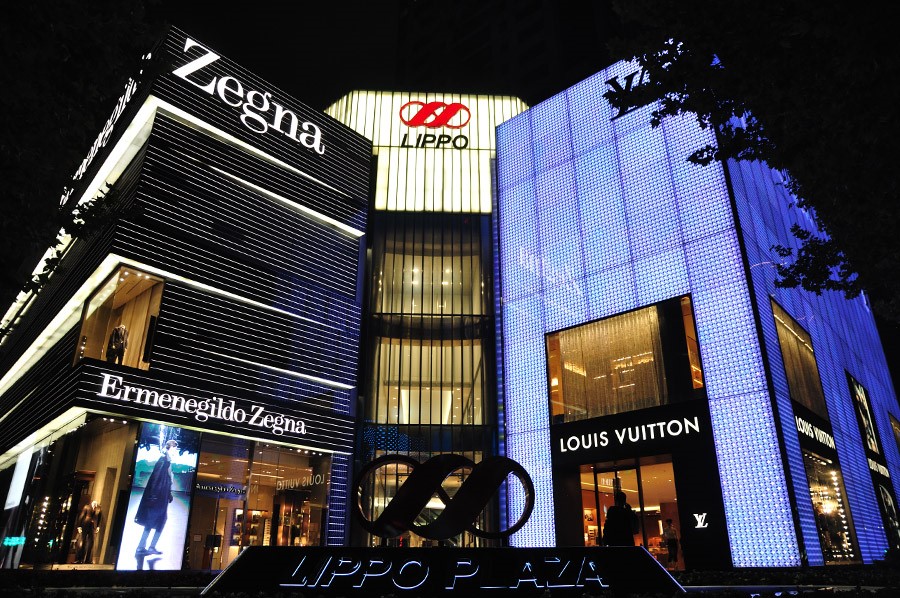
Post-COVID, physical retail looked shaky. By 2024 and into 2025, luxury flagships are coming back. LVMH opened Louis Vuitton, Dior, and Tiffany as a three-brand complex in Beijing Sanlitun. Moncler opened two new boutiques in Shanghai and Hangzhou. Quiet luxury brands Lemaire and Our Legacy opened in Chengdu and other tier-1 cities.
The mainland Chinese personal luxury market contracted 3 to 5% in 2025, a sharp improvement from the 17 to 19% decline in 2024. Luxury executives confirmed publicly in late 2025 that shoppers are returning to stores.
Physical stores in China do something that digital cannot: they give the brand a physical address in the consumer’s mind. For luxury, a flagship in Sanlitun or on Nanjing Road signals commitment to the market. It drives organic press coverage, social media check-ins, and brand searches online. The store itself becomes content.
For accessible and mid-market brands, opening physical retail is expensive and high-risk. The ROI on a well-run Douyin shop or Tmall flagship is typically faster and more measurable. Physical retail in this tier only makes sense once the brand has proven demand online.
Which Channel Fits Which Brand Type
- Luxury brands: Start with a WeChat mini-program for owned CRM and VIP sales. Add RedNote for aspirational content. Open a physical flagship in one tier-1 city. Use Tmall for brand validation and search capture, but not as the primary revenue driver.
- Accessible and mid-market brands: Lead with Douyin for live commerce and impulse purchases. Add a Tmall flagship to capture search-intent buyers. Use RedNote for trust-building reviews.
- Niche and designer brands: RedNote is the primary entry point. Build a community first, then use a WeChat mini-program for direct sales. Add Douyin for targeted short-video content. Consider Tmall once the brand has enough recognition.
The standard consumer journey in 2025 and 2026: discover on Douyin short video, validate on RedNote reviews, buy via WeChat mini-program or Tmall. A brand that only covers one of these steps is leaving money on the table.
How Fashion China Agency Helps
Fashion China Agency works with brands across all three tiers to build the right channel mix. For luxury clients, our team manages WeChat mini-program setup, RedNote content production, and KOL partnerships. For mid-market and accessible brands, we handle Douyin livestream production, Tmall flagship management, and RedNote seeding campaigns.
Our ecommerce services for fashion brands page covers the channel setup, content production, and ongoing management options we offer.
| Channel | Best For | Key Metric (2025/2026) | Priority by Brand Type |
|---|---|---|---|
| Douyin Shop + Live | Accessible and mid-market fashion | 800B yuan fashion GMV in 2025; 40% of revenue via live commerce | High for accessible/mid; low for luxury |
| RedNote (Xiaohongshu) | All brand types for discovery and trust | 300M MAU; 4-6% conversion rate; 90% purchase influence | High for all, especially niche brands |
| WeChat Mini-Program | Luxury brands, owned CRM, VIP drops | 3T yuan GMV in 2024; 25% conversion rate in fashion | Essential for luxury; useful for all |
| Tmall Flagship Store | Search-intent capture, brand validation | Still the largest single ecommerce platform by GMV | High for mid-market; optional for luxury/niche |
| Physical Flagship Store | Luxury brand experience and signaling | Luxury market down 3-5% in 2025 (recovering from -19% in 2024) | Essential for luxury; not recommended for others at entry stage |
| Social Media (WeChat, Weibo) | Driving traffic, CRM, brand community | 1.1B WeChat MAU; Channels hit 100B yuan GMV in 2024 | High for all brands |
FAQ
Q: Should my fashion brand start online or with a physical store in China?
A: Start online. Unless you are a luxury brand with the budget for a flagship and the brand recognition to justify it, the fastest path to revenue is through Tmall, Douyin, or a WeChat mini-program. Prove demand online first.
Q: What is the best ecommerce platform for fashion brands entering China?
A: It depends on your price point. Accessible and mid-market brands see the best results starting with Douyin Shop and a Tmall flagship. Luxury brands should prioritize WeChat mini-programs and RedNote before anything else. Niche brands often do best starting with RedNote, then adding WeChat direct sales once they have an audience.
Q: Is Tmall still worth it for fashion brands in 2026?
A: Yes, but it is not the whole strategy. Tmall is where Chinese shoppers go when they already know what they want. It captures search intent well. But Tmall alone does not build brand awareness or drive discovery. You need Douyin or RedNote feeding the top of the funnel.
Q: How does RedNote fit into a fashion brand’s China strategy?
A: RedNote is where trust gets built. Consumers use it to check reviews and see how real people wear a product before buying. Brands that invest in RedNote content see higher conversion downstream on Tmall and WeChat. The 4 to 6% average conversion rate from RedNote posts is the highest of any content platform in China.
Q: Do luxury fashion brands still need physical stores in China?
A: For top-tier luxury, yes. A flagship store in Beijing or Shanghai is a statement of commitment to the Chinese market. It generates press, social content, and a premium in-store experience that cannot be replicated digitally. But it needs to work together with WeChat, RedNote, and live events.
References
- Jing Daily, “Quiet Luxury Brands Open Stores Across China’s Tier-1 Cities,” 2025
- Bain & Company, “China Personal Luxury Goods Market Report,” 2025
- Business of Fashion, “Douyin’s Rise as a Global Fashion Commerce Platform,” 2025
Marcus Zhan is a fashion marketing strategist based in Shanghai, specializing in China ecommerce and brand entry for Western fashion labels.


1 comment
Yann.02
Online or physical shops? Why choosing when you can pick both and be more efficient!! Totally agree with O2O strategy, still the cost-efficient strategy to bet on in China. Online to offline is more popular than offline to online but people are more and more wealthy and have less and less time to purchase. A very good article.