

The athleisure and outdoor apparel market in China is one of the fastest-growing segments in Chinese fashion. The North Face built a compelling case study for how a Western outdoor brand can establish genuine market leadership in China: by understanding that Chinese consumers relate to outdoor culture differently than Western consumers, and adapting brand positioning, digital strategy, and product releases accordingly.
China’s sportswear market has grown from approximately $23 billion in 2014 to over $70 billion by 2025, with athleisure as one of the primary growth drivers. The category is no longer niche: fitness, outdoor activities, and wellness have become mainstream lifestyle identifiers for urban Chinese consumers aged 20 to 45.
Why Athleisure Resonates in China
Athleisure succeeds in China for reasons that go beyond functionality. Chinese consumers, particularly in tier-1 and tier-2 cities, associate athletic wear with an active, health-conscious, and aspirational lifestyle. Wearing premium sportswear or outdoor gear signals that you have the income, the time, and the cultural awareness to pursue healthy activities. This “lifestyle signaling” function is just as important as product performance in purchase decisions.
The outdoor activities segment accelerated strongly post-2020. Camping, hiking, trail running, and ski culture all saw rapid growth as urban Chinese consumers sought outdoor experiences. This directly benefited brands like The North Face that had deep outdoor heritage and could offer credible positioning in the outdoor lifestyle space, not just gym wear.
China is also an aging society: with over 200 million seniors and that number growing, health-consciousness spans multiple generations. The combination of an older population prioritizing wellness and a younger generation embracing fitness as identity creates sustained demand across age cohorts.
The North Face Strategy in China
Repositioning Around Nature and Spiritual Connection
In Western markets, The North Face communicates extreme adventure and athletic performance. For China, the brand took a different approach: connecting outdoor activity with the Chinese cultural relationship with nature, which emphasizes harmony, contemplation, and reconnection with the natural world. This is a meaningfully different positioning: less “conquer the mountain,” more “find yourself in nature.” The brand’s 2013 China-focused campaign featuring athlete Jimmy Chin, centered on the idea that there is an explorer in all of us, generated over 216,000 new community members and became one of the most discussed brand campaigns on Chinese social media that year.
Distribution: Online and Physical Together
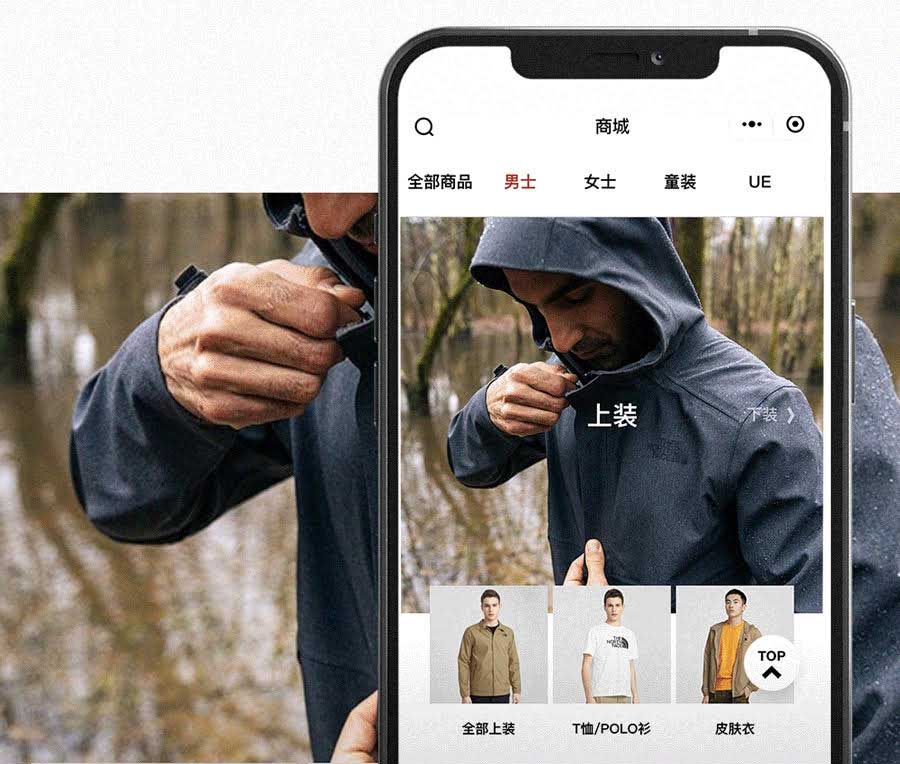
The North Face operates an integrated online-offline strategy in China. Physical flagship stores are present in major tier-1 and tier-2 cities including Chengdu, Guangzhou, Shanghai, and Beijing. The brand maintains official flagship stores on both Tmall and JD.com, ensuring visibility across China’s two dominant e-commerce platforms. Its WeChat presence includes both a brand account for content and community engagement and a WeChat Mini Program store for direct purchase.
Social Media Presence
The North Face maintains active accounts on WeChat, Weibo, Xiaohongshu, and Douyin. Xiaohongshu is particularly important: the platform’s user base skews toward fashion-conscious urban consumers who research purchases through peer content, making it the ideal environment for athleisure and outdoor lifestyle brands. The brand’s Xiaohongshu presence generates organic content from consumers documenting hikes, camping trips, and daily athleisure wear, providing authentic third-party validation that paid advertising cannot replicate.

Collaboration Strategy
The North Face’s 2020 collaboration with Gucci was one of the most successful brand partnerships in the Chinese market that year. The collection’s launch generated 76 million consumer interactions on Weibo’s dedicated hashtag, and brand videos on Douyin accumulated over 10 million views. The collaboration worked because it brought together two premium brands with complementary audiences: Gucci’s established luxury consumers and The North Face’s outdoor lifestyle community. The visual aesthetic, combining Gucci’s maximalist heritage print style with North Face’s outdoor functionality, generated extensive organic content sharing across Chinese social platforms.
Brand collaborations remain a highly effective strategy in China for athleisure and sportswear brands. They generate concentrated media attention, attract consumers from both brand audiences, and create limited-edition scarcity that drives urgency and resale market demand.

Chinese Cultural Calendar Activations
The North Face has invested consistently in Chinese New Year limited edition collections. CNY releases give the brand a culturally relevant moment to connect with consumers each year, with red-dominant colorways and Chinese design motifs applied to iconic pieces like the 1994 Mountain Light Jacket. These releases generate social media coverage well beyond their sales volume, as consumers share content about the collections on Xiaohongshu and Douyin.
Competitive Landscape: Domestic Brands Rising
The North Face operates in an increasingly competitive environment. Chinese domestic brands Anta and Li Ning have invested heavily in product quality, brand positioning, and athlete partnerships over the past decade. Li Ning in particular has built strong cultural cachet through its “China Li Ning” streetwear-influenced collections and its international fashion week activations. Both domestic brands command genuine consumer loyalty and are perceived as quality alternatives to international names, particularly among younger consumers with strong national identity.
Arc’teryx has emerged as the premium outdoor brand gaining the most traction among China’s highest-spending outdoor consumers. The brand’s technical positioning and premium price point appeal to consumers who have already graduated from mass-market outdoor brands. For The North Face, this means the competitive set is more complex than it was five years ago: domestic brands compete on price and cultural resonance from below, while Arc’teryx and other premium outdoor brands compete from above.

2026 Market Context
China’s outdoor sports participation continues to grow. Ski tourism, trail running events, camping culture, and cycling have all built sustainable communities with strong consumption behavior around gear and apparel. The North Face benefits from each of these trends as consumers seek credible outdoor brands that combine performance with style. The brand’s position is particularly strong among consumers who want outdoor gear that works well in both the trail and the city, a growing segment as “gorpcore” aesthetic continues its influence on mainstream fashion in China.
E-commerce remains the primary channel for athleisure purchases in China. Tmall flagship stores, JD.com, and increasingly Douyin Shop are where athleisure purchase decisions convert. Xiaohongshu drives discovery and research. WeChat supports CRM, community management, and direct purchase for loyal customers. A brand operating in this space needs to maintain active presence and content quality across all five platforms to remain competitive.

FAQ: The North Face and Athleisure Marketing in China
Why has The North Face been more successful in China than many other Western outdoor brands?
The North Face adapted its core positioning for Chinese consumers rather than simply translating its Western marketing. By connecting outdoor activity with the Chinese relationship to nature and wellness, rather than extreme sport or adventure, the brand built relevance for a broader audience. Its consistent digital investment across WeChat, Weibo, Xiaohongshu, and Douyin, combined with strong e-commerce presence on Tmall and JD, meant consumers could discover, research, and purchase without friction.
How important are collaborations for building brand awareness in China’s athleisure market?
Very important. Collaborations between sportswear brands and luxury houses have proven particularly effective in China, where the combination of premium status signaling and functional product credibility resonates strongly. The Gucci x The North Face collaboration is the benchmark, but collaborations with domestic Chinese brands or cultural institutions can be equally effective for reaching specific consumer segments.

How do domestic brands like Anta and Li Ning compare to The North Face?
Anta and Li Ning compete on price accessibility and national brand pride. They have significantly closed the quality gap with international brands over the past decade. Li Ning’s fashion credibility is particularly strong among younger consumers. However, The North Face retains an advantage in outdoor heritage authenticity and in the premium mid-range price segment. The competitive dynamic is less about head-to-head market share and more about targeting different consumer segments within the broader athleisure market.
What is the right digital strategy for an athleisure brand entering China?
Start with Xiaohongshu for brand awareness and consumer trust-building through KOL and organic content. Build Tmall and JD.com storefronts for purchase conversion. Use Douyin for reach and entertainment-led brand content. Maintain WeChat for community management, CRM, and loyal customer engagement. Paid search on Baidu supports consumer research moments. The allocation between these channels should reflect where your target consumer spends time: younger consumers skew toward Douyin and Xiaohongshu, older premium consumers toward WeChat and Tmall.
Photo source: GMA (MarketingToChina)
Is the post-pandemic outdoor boom in China sustainable?
The data suggests yes. Camping participation rates have remained elevated since 2022. Ski resort openings continue. Trail running events have expanded significantly in number and participation. The outdoor lifestyle behaviors adopted during and after the pandemic appear to have become durable habits for a meaningful segment of urban Chinese consumers, not a temporary trend. Brands with credible outdoor positioning have a multi-year growth window ahead of them.
About Fashion China Agency
Fashion China Agency is an independent Shanghai-based agency specialising in fashion, luxury, and lifestyle brand entry into the Chinese market. We help international brands build awareness, drive e-commerce revenue, and build communities on Xiaohongshu, Douyin, WeChat, and Tmall. Our team of 40+ China specialists covers content strategy, KOL management, paid media, e-commerce operations, and live commerce.
External expert: Philip Chen is co-founder of GMA (Gentlemen Marketing Agency), a separate digital agency in Shanghai. He is not part of the Fashion China Agency team: we quote him as an independent expert on this topic. Over 12 years working with fashion, beauty, and lifestyle brands on China market entry. Read GMA’s view on marketing a sportswear brand in China or follow Philip Chen on LinkedIn.
Fashion China Agency is an independent agency based in Shanghai, specialised in luxury, fashion and beauty brands in China. Experts from other agencies quoted in our articles speak in their own name.